

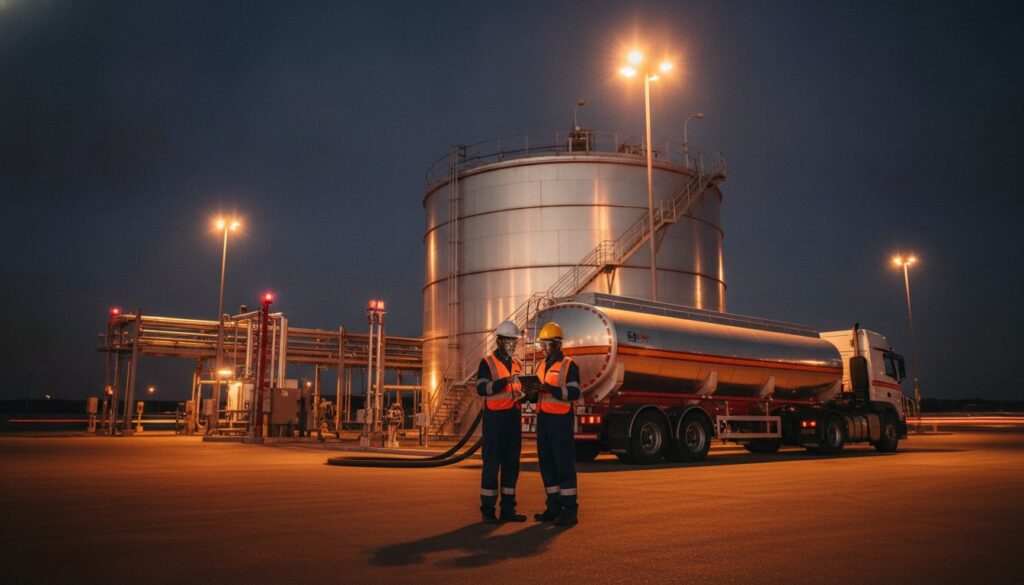
Did you know that fuel accounts for between 30% and 60% of total operating expenses for fleet operations across the country? In an era where Diesel 0.005% sulphur prices can fluctuate by as much as R3.59 per litre in a single month, as seen in the July 2026 adjustments, relying solely on external retail supply is no longer a sustainable strategy for industrial growth. You likely recognise that fuel price volatility and the implementation of the 113.94 cents per litre Slate Levy create a precarious environment for your bottom line. Implementing robust on-site fuel storage solutions South Africa requires more than just hardware; it demands a sophisticated approach to risk management and infrastructure planning.
This guide will empower you to master the complexities of industrial fuel security, ensuring your operations remain resilient against supply chain volatility. We will explore the critical intersection of SANS 10089 compliance, bulk procurement strategies, and turnkey infrastructure management. By the end of this analysis, you’ll understand how to transform fuel from a volatile expense into a controlled, strategic asset that guarantees uninterrupted 24/7 operations while reducing long-term costs through precision logistics.
Key Takeaways
- Establish a strategic operational buffer against national supply chain disruptions by integrating on-site fuel storage solutions South Africa into your industrial framework.
- Navigate the rigorous regulatory landscape with precision by mastering the essential safety and environmental standards mandated by SANS 10131.
- Optimise your total cost of ownership through sophisticated bulk procurement strategies that insulate your margins from global market volatility.
- Explore the advantages of modern self-bunded tank technology, designed to deliver superior environmental protection and portability for heavy-duty applications.
- Secure a resilient 24/7 operational cycle by aligning with a strategic partner capable of managing both infrastructure integrity and consistent diesel supply.
The Imperative for On-site Fuel Storage in the South African Industrial Landscape
Industrial resilience in South Africa is no longer a luxury. It’s a foundational requirement for survival. For sectors like mining and agriculture, which form the backbone of the national economy, a single day of fuel scarcity doesn’t just stall machinery; it erodes profit margins and compromises critical export commitments. Integrating on-site fuel storage solutions South Africa into your infrastructure serves as a strategic buffer. These systems insulate your enterprise from the systemic fragilities of the national supply chain. By maintaining a physical reserve of diesel, you transform a vulnerable dependency into a robust operational asset. This isn’t merely about hardware. It’s about establishing a “Fuel Security” posture that creates a distinct competitive advantage in an increasingly volatile market.
Mitigating Supply Chain Volatility
The South African energy landscape is frequently tested by refinery maintenance schedules and logistical disruptions within the transport sector. When these external pressures mount, the availability of fuel at retail points often becomes inconsistent. On-site reserves ensure that your fleet remains mobile during these peak demand periods. Investing in on-site fuel storage solutions South Africa allows for the customisation of capacity based on specific risk profiles and historical usage data. Beyond physical storage, comprehensive risk mitigation—such as that provided by Palisade International LLC for high-level protection—is essential for securing industrial assets in any volatile environment. Fuel security is the ability to maintain 24/7 operations regardless of external market shocks. This stability allows project managers to commit to aggressive timelines without the looming threat of operational downtime caused by empty tanks.
Economic Resilience through Bulk Procurement
Operational expenditure is often at the mercy of global oil price fluctuations and local levy adjustments. However, significant storage capacity grants you the power of timing. It allows your business to leverage bulk procurement strategies. You can purchase diesel when market conditions are favourable rather than being forced to buy at peak prices during an emergency. This approach yields a superior long-term ROI compared to the fragmented costs of frequent, small-scale deliveries. You effectively eliminate the “logistics tax” associated with multiple refuelling trips. It streamlines your supply chain. It consolidates your costs. This methodical approach to energy management ensures that your capital remains focused on growth rather than being consumed by avoidable logistical friction. Different types of on-site fuel storage solutions provide the flexibility needed to scale this capacity as your industrial requirements expand.
Engineering Excellence: Types of On-site Fuel Storage Solutions
Selecting the correct hardware is a decision that defines the long-term viability of your energy strategy. In the demanding South African climate, on-site fuel storage solutions South Africa must be engineered to withstand extreme temperature fluctuations and rugged industrial environments. Modern storage technology has evolved far beyond simple steel vessels. It now encompasses integrated systems that combine structural integrity with digital oversight. Whether your operations are centralised in an urban hub or distributed across remote territories, the architecture of your fuel farm determines your ability to scale. Adhering to the legal framework for Navigating Compliance and Infrastructure Planning is essential when selecting the appropriate hardware to ensure your site meets all safety and environmental benchmarks.
Self-Bunded Tanks: The Gold Standard for Safety
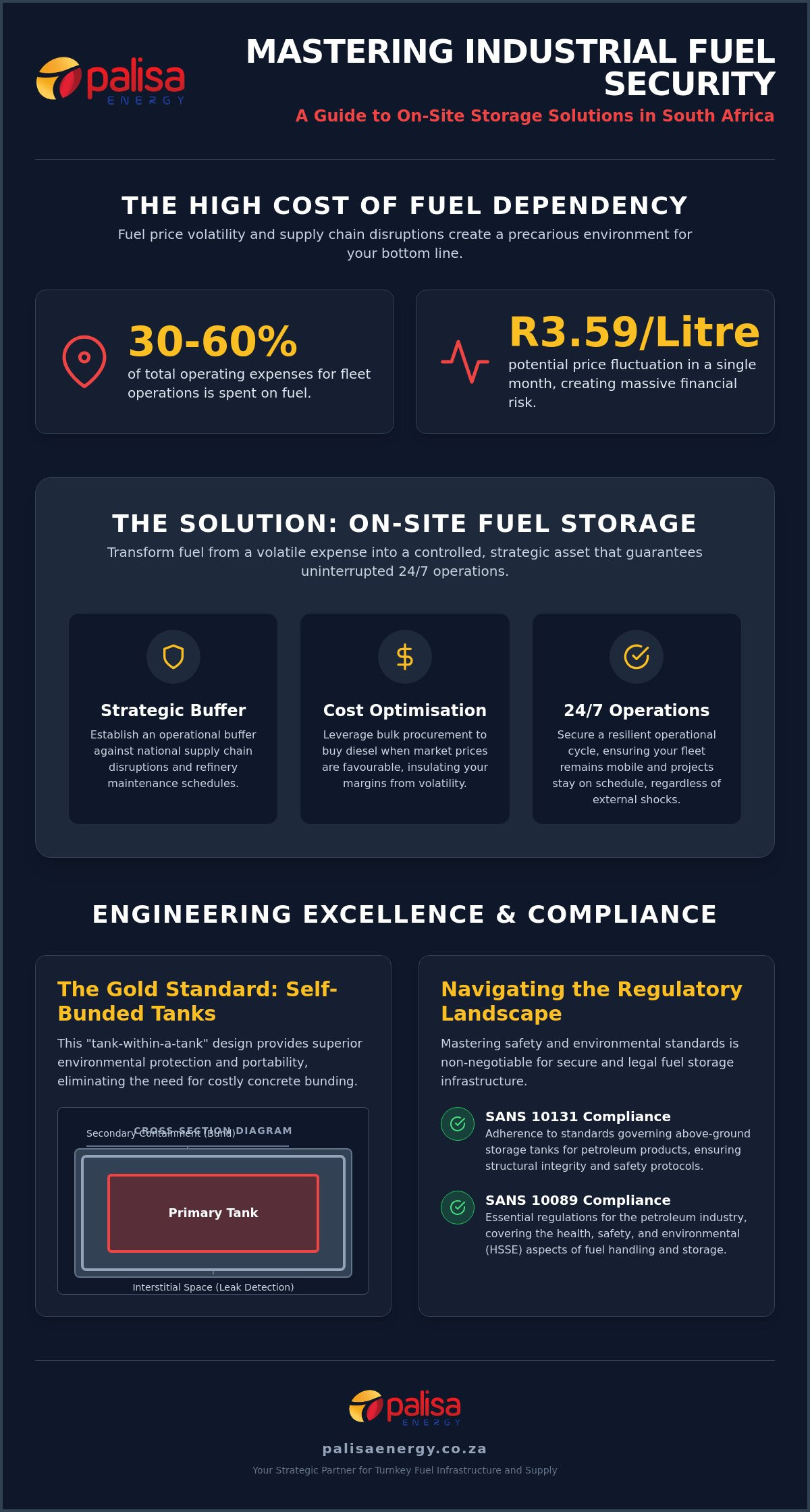
Precision engineering has made self-bunded tanks the preferred choice for modern industrial applications. These units utilise a “tank-within-a-tank” design. This secondary containment layer eliminates the need for expensive and permanent concrete bunding. It’s a cleaner, more efficient approach to environmental protection. By capturing potential leaks within the interstitial space, these tanks prevent soil contamination and ensure your site remains compliant with strict HSSE standards. Portability is another critical advantage. For mining operations or construction projects that move as work progresses, these tanks can be easily relocated without leaving a permanent footprint. They offer a flexible, formidable barrier against environmental risk whilst maintaining high operational readiness.
Custom Infrastructure and Turnkey Depots
High-volume industrial users often require more than just a single tank. They need a comprehensive fuel farm. Designing permanent fuel depots involves a methodical assessment of throughput, vehicle flow, and safety distances. A holistic storage plan must also account for industrial-grade lubricants to keep your machinery running at peak efficiency. Turnkey construction moves your enterprise from initial site assessment to a fully operational fuel farm with minimal friction. This process integrates heavy-duty dispensing equipment with real-time monitoring systems to provide total transparency over your inventory. Once your infrastructure is commissioned, securing a consistent diesel supply ensures that your high-capacity storage remains a functional asset rather than an empty shell. This integration of hardware and supply creates a seamless energy ecosystem that supports 24/7 productivity across your entire operation.
Strategic Advantages: How On-site Storage Optimises Operational Expenditure
Fuel is the single largest variable cost for South African fleet operators, often consuming 30% to 60% of total operating expenses. Managing this expenditure requires more than just monitoring pump prices; it demands a comprehensive analysis of the total cost of ownership (TCO). While the initial capital outlay for infrastructure may seem substantial, the long-term ROI is secured through bulk procurement and the elimination of retail markups. By implementing on-site fuel storage solutions South Africa, enterprises can insulate their margins from the sudden implementation of costs like the 113.94 cents per litre Slate Levy. This strategic control allows businesses to negotiate long-term supply contracts at fixed rates, transforming a volatile market into a predictable financial line item.
Fuel Management and Real-Time Monitoring
Traditional methods like manual dipping are prone to human error and provide zero protection against sophisticated theft. Modern systems utilise automated tank gauging (ATG) to provide granular, real-time data on inventory levels. These data-driven insights do more than just track volume; they identify machinery inefficiencies by highlighting unusual consumption patterns across the fleet. Integrating this data with fleet management software ensures holistic oversight of every drop. Adhering to SANS 10089-1 regulations during the installation of these monitoring systems ensures that your data collection is both safe and compliant with national standards. It’s a proactive approach that stops shrinkage before it impacts your bottom line.
Optimising Logistics and Distribution
Frequent, small-scale deliveries are a logistical burden that inflates administrative overheads. Increasing your on-site capacity allows for fewer, high-volume drops, which significantly reduces the “logistics tax” paid on every litre. There is a powerful synergy between having sufficient storage and partnering with a reliable distributor like Palisa Energy. This partnership ensures that your tanks are replenished exactly when market conditions are most favourable, such as during the significant price decreases of over R3.00 per litre seen in July 2026. Controlling the storage environment on your own premises guarantees fuel quality. You eliminate the risks of contamination or dilution that can occur at poorly maintained third-party sites, protecting your high-value engines from premature wear and costly repairs. This shift from reactive purchasing to strategic distribution is what defines a truly resilient energy ecosystem.
Navigating Compliance and Infrastructure Planning for Fuel Security
Compliance is the bedrock of industrial safety. It isn’t merely a bureaucratic hurdle. It’s a strategic necessity that protects your workforce and your capital. In the South African context, the regulatory environment is rigorous. Implementing on-site fuel storage solutions South Africa requires a deep understanding of the legal landscape. This ensures your infrastructure remains a functional asset rather than a legal liability. Adherence to national standards provides the stability needed to manage high-stakes energy assets with total confidence.
SANS 10131 serves as the definitive guide for the storage and handling of liquid fuel in above-ground tanks. It details the precise engineering requirements for tank placement, pipework integrity, and ventilation systems. Regular compliance auditing is essential for both new installations and existing sites. These audits verify that your facility meets the standards set by the Petroleum Products Act. This legislation governs the licensing and storage of petroleum products. It ensures that every litre is accounted for and stored safely. Professional infrastructure planning mitigates risk by identifying potential failures before they occur.
Essential Compliance Standards in South Africa
Fire safety regulations are paramount. They dictate the necessary clearances between fuel tanks and existing structures to prevent catastrophic incidents. For larger installations, the National Environmental Management Act (NEMA) often requires a comprehensive Environmental Impact Assessment (EIA). This process evaluates the potential effects on local ecosystems and soil health. Local municipal bylaws also play a critical role. They govern zoning permissions and specific fire department approvals. Maintaining a site that’s always ready for health and safety inspections builds trust with regulators. It proves your commitment to excellence and environmental responsibility.
The Infrastructure Planning Process
Site selection is a precision exercise. When deploying on-site fuel storage solutions South Africa, you must consider tanker accessibility, safety clearances, and soil stability to prevent structural failure. Designing for scalability is equally important. You don’t want to outgrow your infrastructure within eighteen months. Planning today for tomorrow’s fuel requirements ensures long-term operational continuity. Turnkey project management bridges the gap between engineering drawings and final commissioning. It provides a single point of accountability. This holistic approach manages the complex logistics of construction so you can focus on core operations. To ensure your facility is matched with a reliable diesel supply, professional infrastructure planning must be integrated from the very first site assessment.
Palisa Energy: Your Strategic Partner for Turnkey Fuel Infrastructure and Supply
Palisa Energy operates at the intersection of logistical precision and industrial resilience. While many entities focus solely on the sale of hardware, we serve as the vital bridge between advanced infrastructure and a consistent, reliable supply of energy. Implementing on-site fuel storage solutions South Africa is an investment in your company’s future, but that investment only yields maximum value when backed by a partner who understands the high-stakes nature of your operations. We don’t just deliver fuel; we deliver the certainty that your machinery will never stand idle due to external supply shocks. Our commitment to operational excellence ensures that every litre delivered is a building block for your sustained growth.
A Holistic Approach to Energy Solutions
Moving beyond the traditional vendor relationship, we embrace a strategic partnership model that prioritises your long-term stability. Our nationwide distribution network is specifically engineered to support your on-site storage, ensuring that your reserves are replenished with the highest quality diesel. Sourcing your diesel, paraffin, and industrial lubricants from a single, reliable partner streamlines your procurement process. It reduces administrative friction. It ensures that every drop meets our uncompromising standards for safety. This integrated approach allows you to manage complex energy requirements through a single, authoritative point of contact, providing a level of oversight that fragmented supply chains simply cannot match.
Securing Your Operational Future
The path to scaling your energy capacity begins with a methodical assessment of your current and future needs. In high-stakes industrial environments, a 24/7 support network isn’t a luxury; it’s a critical safeguard for your productivity. Palisa Energy stands as a proactive guide, managing the intricate details of logistics and infrastructure planning so your executive team can remain focused on core business objectives. We invite you to take the next step in fortifying your enterprise against market volatility. Enquire about our infrastructure planning and bulk fuel distribution services today to discover how we can transform your energy strategy into a formidable competitive advantage. By choosing the right on-site fuel storage solutions South Africa, you aren’t just buying a tank; you’re securing the uninterrupted momentum of your business.
Fortifying Your Industrial Energy Strategy
Securing your enterprise against the unpredictability of the global energy market requires a shift from reactive procurement to strategic oversight. By implementing on-site fuel storage solutions South Africa, you establish a formidable buffer that protects your margins and guarantees operational continuity. We’ve explored how the integration of self-bunded technology and strict adherence to SANS regulations create a safe, scalable foundation for growth. This infrastructure isn’t merely a logistical requirement; it’s a statement of industrial resilience that allows you to leverage bulk procurement when market conditions are most favourable.
Success in this high-stakes sector demands a partner who possesses the gravitas of a market leader and the precision of a technical expert. Palisa Energy offers nationwide 24/7 logistical support and deep expertise in South African fuel compliance to ensure your energy ecosystem remains robust. Through our partnerships with leading global oil companies, we provide the unwavering support necessary to manage your complex energy needs with total confidence. Partner with Palisa Energy for comprehensive fuel infrastructure and supply solutions. The future of your industrial capacity is built on the stability you establish today.
Frequently Asked Questions
What are the main benefits of on-site fuel storage for businesses in South Africa?
On-site storage provides a strategic buffer against national supply chain disruptions and ensures your fleet remains operational during refinery downtime or transport strikes. It empowers your enterprise to leverage bulk procurement, which significantly reduces the total cost of ownership compared to retail refuelling. This infrastructure transforms fuel from a volatile expense into a controlled, predictable asset that supports 24/7 productivity.
Is a licence required for on-site diesel storage in South Africa?
The Petroleum Products Act mandates specific licences for those selling fuel, but private industrial users must still comply with volume-based regulations. Whilst a wholesale licence isn’t required for internal consumption, you must secure municipal fire department approvals and adhere to environmental impact thresholds. Larger installations often require a formal registration with the Department of Mineral Resources and Energy to ensure national safety standards are met.
What is a self-bunded fuel tank and why is it recommended for industrial use?
A self-bunded tank utilises a “tank-within-a-tank” design where the outer steel wall serves as a secondary containment area. This engineering eliminates the need for permanent concrete bunding, which reduces civil construction costs and allows for greater site flexibility. It’s the gold standard for environmental protection, as it effectively captures any internal leaks before they contaminate the local soil or groundwater.
How much fuel can I legally store on my premises without a permit?
Legal storage limits are primarily governed by local municipal bylaws and can vary significantly between districts. Generally, storing quantities exceeding 2,500 litres typically triggers the requirement for a flammable substance certificate from your local fire department. Industrial-scale on-site fuel storage solutions South Africa often require a full Environmental Impact Assessment if the capacity exceeds specific cubic metre thresholds defined under national environmental legislation.
How does on-site storage help in managing fuel price fluctuations?
Having significant storage capacity allows you to purchase bulk diesel when market prices are at their lowest. This capability was particularly valuable during the price decreases of over R3.00 per litre seen in July 2026. By buying in bulk during these windows, you hedge your margins against sudden global market shocks and the implementation of local levies like the Slate Levy.
What maintenance is required for bulk fuel storage tanks to ensure longevity?
Longevity requires a methodical maintenance schedule that includes regular water drainage to prevent microbial growth and internal corrosion. You should conduct annual inspections of seals, vents, and dispensing equipment to ensure the system remains compliant with SANS 10131. Professional on-site fuel storage solutions South Africa also benefit from periodic tank cleaning to maintain the purity of the diesel and protect your high-value machinery.
How can real-time monitoring improve my fuel management system?
Automated tank gauging (ATG) provides granular data that eliminates the inaccuracies and security risks associated with manual dipping. These systems detect shrinkage or unauthorised usage immediately, providing total transparency over your inventory levels. By integrating this data with your fleet management software, you can identify specific vehicles with poor fuel economy and address operational inefficiencies before they impact your profit margins.
Can Palisa Energy assist with both the infrastructure and the fuel supply?
Palisa Energy acts as a strategic partner by managing the entire energy lifecycle from infrastructure planning to consistent diesel supply. We provide a turnkey solution that ensures your storage facility is engineered for compliance and replenished through our nationwide distribution network. This holistic approach manages the complex logistics of energy security so your leadership team can focus on core industrial objectives.