

Industrial lubrication is not merely a routine maintenance task; it is the strategic heartbeat of operational continuity. Every friction point in your facility represents a potential failure, and selecting the incorrect oil lubricant often serves as the catalyst for expensive, unscheduled downtime. You likely recognise the mounting pressure of rising maintenance costs and the technical complexity of modern additive packages. It’s a high-stakes environment where precision is the only safeguard against component fatigue.
This comprehensive guide provides the clarity required to master your lubrication strategy and fortify your machinery against premature wear. We will examine the critical framework for selecting high-performance fluids, whilst addressing the impact of the 2026 ISO 12940 standards on grease stability and asset preservation. By aligning your technical requirements with a robust logistical approach, you can transform lubrication from a recurring expense into a powerful driver of long-term mechanical reliability.
Key Takeaways
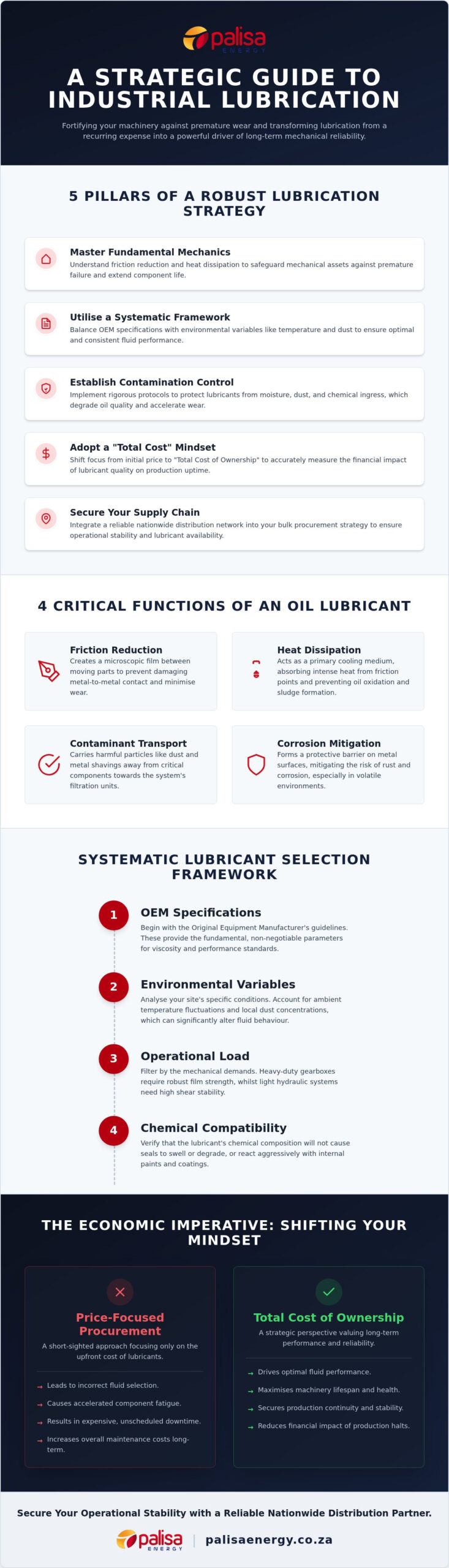
- Master the fundamental mechanics of friction reduction and heat dissipation to safeguard your mechanical assets against premature failure.
- Utilise a systematic selection framework that balances OEM specifications with environmental variables to ensure optimal fluid performance.
- Establish rigorous contamination control protocols to protect your oil lubricant from the degrading effects of moisture, dust, and chemical ingress.
- Shift from a price-focused mindset to a “total cost of ownership” perspective to reduce the financial impact of unscheduled production halts.
- Secure operational stability by integrating a reliable nationwide distribution network into your bulk lubricant procurement strategy.
Understanding the Role of Oil Lubricant in Industrial Operations
In the high-stakes environment of heavy industry, an oil lubricant serves as more than a simple fluid; it acts as a steadfast guardian of mechanical integrity. This vital substance is engineered to reduce friction and wear between mechanical surfaces, ensuring that the relentless motion of gears and bearings doesn’t lead to catastrophic failure. At its core, the application of lubricants is governed by tribology, the sophisticated science of interacting surfaces in relative motion. Understanding What is a lubricant? requires looking beyond the bottle to the complex chemical and physical interactions that occur at the microscopic level.
Reliability is non-negotiable. Beyond mere friction reduction, quality lubricants perform several critical functions. They facilitate the transport of contaminants to filtration systems, mitigate the risk of corrosion in volatile environments, and provide essential heat dissipation. For South African manufacturing and energy sectors, where operational uptime directly correlates with economic growth, the choice of lubricant becomes a strategic decision rather than a procurement afterthought. Adhering to the latest performance standards, such as the API 1509 24th edition released in July 2026, ensures that these fluids meet the rigorous demands of modern industrial engines and high-torque machinery.
The Chemistry of Friction Reduction
Precision engineering demands that moving parts remain separated by a microscopic film to prevent damaging metal-to-metal contact. This is achieved through two primary states: boundary lubrication and hydrodynamic lubrication. In boundary conditions, such as during start-up or under heavy loads, the lubricant’s high-register additive packages form a protective chemical layer on the metal surfaces. Conversely, hydrodynamic lubrication occurs when a full fluid film is established, completely lifting the surfaces apart. These additives don’t just supplement the base oil; they fortify it against the extreme pressures found in industrial gearboxes and hydraulic systems.
Thermal Management and System Cooling
Efficient operations require meticulous temperature control. An oil lubricant functions as a primary cooling medium, absorbing intense heat from friction points and carrying it towards cooling reservoirs or heat exchangers. This thermal management is particularly vital in the harsh South African industrial climate, where ambient temperatures can fluctuate significantly. If the thermal limits of the fluid are exceeded, the oil begins to oxidise. This chemical breakdown leads to the formation of sludge and varnish, which can clog vital oil galleries and accelerate component wear. Maintaining thermal stability ensures that your machinery remains operational whilst protecting the long-term health of the entire mechanical system.
How to Choose the Correct Oil Lubricant: A Systematic Framework
Selecting the ideal oil lubricant for your facility requires a methodical departure from guesswork. It begins with a rigorous adherence to Original Equipment Manufacturer (OEM) specifications, which provide the fundamental parameters for viscosity and performance standards. However, these guidelines represent a baseline rather than a final solution. You must also account for the specific environmental variables of your site, such as ambient temperature fluctuations and local dust concentrations, which can significantly alter fluid behaviour. A lubricant that performs admirably in a temperature-controlled laboratory may fail prematurely in the intense heat of a South African mining operation.
Operational load serves as the next critical filter in your selection process. Light hydraulic systems demand fluids with rapid air release and high shear stability, whereas heavy-duty gearboxes require robust film strength to withstand extreme torque. Beyond these mechanical demands, compatibility remains a vital consideration. The wrong chemical composition can cause seals to swell or degrade, whilst certain additives may react aggressively with internal paints or coatings. To ensure your selection aligns with your long-term operational goals, consult with the technical experts at Palisa Energy to verify your procurement strategy.
Decoding Viscosity and ISO Grades
Viscosity stands as the most critical physical property of any industrial lubricant. It dictates the fluid’s ability to maintain a protective film under specific speeds and loads. In industrial settings, the ISO VG (Viscosity Grade) system provides a standardised framework, ranging from thin ISO VG 2 fluids for high-speed spindles to thick ISO VG 1500 oils for slow-moving, heavy-duty gears. Viscosity index is the measure of an oil’s resistance to thinning at high temperatures. High-index fluids ensure that the protective barrier remains intact even as operational heat rises, preventing the metal-to-metal contact that leads to catastrophic component failure.
Selecting Additive Packages for Specific Environments
Base oils provide the foundation, but high-register additive packages deliver the specialised performance required for harsh environments. Anti-Wear (AW) agents and Extreme Pressure (EP) additives are essential for machinery operating under heavy shock loads, where they form a sacrificial layer to protect metal surfaces. Rust and oxidation (R&O) inhibitors play an equally important role by neutralising acidic by-products and preventing the formation of sludge. Specifically, gear oil requires precisely balanced friction modifiers to optimise torque transfer and reduce thermal stress within the housing. Choosing the correct chemistry ensures your equipment operates at peak efficiency whilst extending the interval between costly maintenance cycles.
Managing Lubrication Cycles and Contamination Control
Effective lubrication management requires a transition from reactive fixes to a disciplined, orchestrated strategy. For operators of large-scale fleets, the primary objective is to maintain the chemical integrity of the oil lubricant throughout its entire service life. This isn’t achieved through occasional checks but through a rigorous adherence to best-practice schedules that account for specific operational stressors. Contamination control stands as the first line of defence, as even the highest-grade fluids cannot protect a system if they’re compromised by external elements.
Primary sources of degradation include moisture ingress, particulate accumulation, and chemical cross-contamination. Each of these factors works to undermine the fluid’s performance, leading to increased friction and eventual component fatigue. To mitigate these risks, you must implement sealed storage solutions and utilise dedicated, colour-coded dispensing equipment. These protocols ensure that the lubricant remains as pure at the point of application as it was when it left the refinery. Integrating regular oil analysis into your workflow serves as a powerful predictive tool, allowing you to identify wear patterns and chemical shifts before they manifest as mechanical failure.
Establishing a Maintenance Rhythm
Precision is mandatory when determining service intervals. Whilst time-based intervals provide a reliable baseline for administrative planning, condition-based monitoring allows for a more nuanced approach that optimises fluid life without compromising mechanical safety. You should train personnel to monitor oil levels and observe changes in fluid colour, as darkening or cloudiness often signals thermal distress or water ingress. Maintaining meticulous records of these observations is essential for regulatory compliance and ensures your warranty claims remain valid in the event of a dispute.
The Impact of Particulate Contamination
Microscopic particulates act as relentless abrasives, grinding away at precision-machined surfaces and accelerating the rate of wear. In the dust-heavy environments of South African mining and construction sites, standard seals are often insufficient. You must employ high-efficiency filtration systems that meet the latest ISO standards to capture these sub-micron threats. Robust storage protocols, including the use of desiccant breathers on bulk tanks, are vital to prevent dust and moisture from entering the system during thermal expansion and contraction cycles. Safeguarding your fluid today prevents the catastrophic costs of a seized engine or a failed hydraulic circuit tomorrow.
The Economic Impact of Lubricant Quality on Operational Continuity
Procurement decisions based solely on the initial price per litre often lead to catastrophic financial outcomes. Whilst a cheaper oil lubricant might appear to reduce immediate operational expenses, it frequently masks a significant increase in the total cost of ownership. High-grade fluids are engineered to resist shear and oxidation, which directly translates to fewer mechanical failures and a more stable bottom line. Consider the impact of a single failed bearing in a high-capacity production line; the resulting halt doesn’t just represent a repair bill but encompasses lost production hours, missed delivery deadlines, and potential reputational damage. By investing in superior lubrication, you effectively insure your facility against the volatility of unscheduled downtime.
Energy efficiency provides another compelling economic argument for premium fluids. Advanced lubricants reduce internal fluid friction, allowing machinery to operate with less resistance and lower power consumption. This reduction in parasitic load might seem marginal on a single unit, yet across a large-scale industrial facility, the cumulative energy savings represent a substantial decrease in overheads. Additionally, a robust lubrication strategy allows for a leaner spare parts inventory. When components last longer, your capital isn’t tied up in emergency stock, allowing you to reallocate those funds towards growth and innovation.
Extending Drain Intervals Safely
Premium synthetic and high-register mineral oils maintain their chemical properties for significantly longer durations than their budget counterparts. This longevity allows you to extend drain intervals safely, reducing the frequency of oil changes and the associated labour costs. From an environmental perspective, extending the service life of your fluids decreases the volume of waste oil generated, aligning your operations with modern sustainability mandates. Ensuring a consistent supply of these high-performance products requires a partner who understands fuel logistics South Africa, providing the reliability needed to maintain your maintenance schedules without interruption.
Predictive Maintenance and Risk Management
Lubricant monitoring is a cornerstone of modern industrial risk management. When integrated into broader fuel security for business South Africa strategies, oil analysis provides a window into the internal health of your assets. Transitioning from a reactive “fix it when it breaks” culture to a proactive maintenance model is the hallmark of a market leader. This shift requires a steadfast guardian who can manage complex logistics with precision. To secure your operational continuity and explore bulk supply solutions, partner with the experts at Palisa Energy today.
Strategic Sourcing and Bulk Distribution with Palisa Energy
Palisa Energy stands as a formidable corporate entity and a dedicated strategic partner for South African industry. As a premier reseller of bulk petroleum products, we specialise in the distribution of high-performance oil lubricant solutions designed for the most demanding mechanical environments. Our position as a market leader is built upon unwavering partnerships with leading oil companies, ensuring that every drop of fluid meets the rigorous quality assurance standards required by modern OEM specifications. We don’t merely supply products. We act as a steadfast guardian of your operational continuity by providing the 24/7 support essential for high-stakes energy and manufacturing sectors.
Reliability is our hallmark. By aligning your technical requirements with our robust logistical capabilities, we transform lubricant procurement from a recurring expense into a powerful driver of long-term mechanical health. Our commitment to excellence ensures that your facility remains shielded from the volatility of supply shortages and technical failures. We manage the complex logistics of energy supply so that you can focus on the growth and momentum of your core business operations.
Nationwide Logistics and Reliability
Orchestrating nationwide distribution across the vast South African landscape requires a high degree of professional authority and precision. Our logistical network utilises real-time monitoring to ensure that bulk deliveries arrive exactly when needed, eliminating the risk of stockouts that could halt critical machinery. Precision drives our logistics. Safety remains our paramount priority, with every transport route meticulously planned to uphold the highest operational standards. By managing complex supply chain hurdles with industrial confidence, we provide the stability necessary for our clients to focus on expansion whilst we handle the intricacies of fluid movement.
Tailored Solutions for Mining and Fleet Sectors
Every industrial sector carries unique requirements, from the abrasive conditions of deep-level mining to the high-tempo demands of commercial fleets. We provide a bespoke approach to sourcing, ensuring that the specific chemical and physical properties of your chosen oil lubricant align perfectly with your asset lifecycle goals. Professional consultancy is a core component of our service. Our expertise extends to fuel infrastructure planning South Africa, where we assist with depot design and rigorous compliance auditing for on-site storage. We invite executive stakeholders to move beyond transactional procurement and secure their supply chain through a long-term, visionary partnership that prioritises integrity and sustainable progress.
Mastering Mechanical Longevity through Strategic Lubrication
Mastering the lifespan of your mechanical assets requires a decisive shift from reactive maintenance to a holistic strategy of asset preservation. By prioritising precise viscosity selection and rigorous contamination control, you protect the heartbeat of your operations from the hidden costs of friction and thermal distress. Selecting the correct oil lubricant serves as the essential foundation; maintaining its chemical integrity through disciplined cycles and professional analysis is what ensures long-term industrial stability.
Operational continuity depends on a supply chain that is as reliable as the machinery it supports. Palisa Energy acts as your strategic partner, bridging the gap between high-performance refinery products and on-site execution through nationwide South African delivery and 24/7 industrial support. Our strategic partnerships with major oil companies guarantee that quality is never compromised, allowing you to focus on growth whilst we manage the complexities of your fluid logistics. Secure your industrial operations with Palisa Energy’s bulk lubricant solutions. Together, we can build a future of unwavering reliability and sustained progress.
Frequently Asked Questions
What is the difference between mineral and synthetic oil lubricants?
Mineral oils are refined from crude oil whilst synthetic lubricants are chemically engineered for enhanced performance. Synthetics provide superior oxidation resistance and thermal stability in extreme environments. Mineral oils remain cost-effective for standard applications but they don’t offer the same longevity or protection under heavy thermal loads.
How often should I perform oil analysis on my industrial machinery?
Perform oil analysis based on the criticality of your machinery and its specific operating conditions. High-stakes assets usually require sampling every 250 to 500 hours or on a monthly basis. This proactive approach allows you to identify wear trends before they result in catastrophic failure.
Can I mix different brands of oil lubricant if they have the same viscosity?
Mixing different brands of oil lubricant is discouraged even if they share an identical viscosity grade. Manufacturers use proprietary additive packages that might be chemically incompatible with one another. Such interactions can cause additives to drop out of solution or lead to the formation of damaging sludge.
What are the signs that an oil lubricant has reached the end of its service life?
Visible darkening, a burnt odour, or the presence of visible particulates indicate that a fluid has reached its limit. If it’s showing a significant change in viscosity during testing, the chemical structure has likely broken down. Immediate replacement is the only way to safeguard your internal components from accelerated wear.
How does the South African climate affect lubricant selection for outdoor equipment?
The South African climate demands lubricants with a high viscosity index to withstand extreme temperature shifts. Equipment operating in regions like the Northern Cape faces intense heat that can lead to oil thinning and rapid oxidation. You should select products that maintain a robust protective film whilst resisting the heavy dust ingress typical of local mining sites.
What is the most effective way to store bulk lubricants on-site?
Store bulk lubricants in a dry, sheltered area using horizontal racking and desiccant breathers to prevent contamination. You should avoid outdoor storage because thermal siphoning can draw moisture into the drums. Implementing a strict first-in, first-out inventory system ensures that you’re always using the freshest product available.
Are there specific lubricants required for high-pressure hydraulic systems?
High-pressure hydraulic systems require specialised fluids with exceptional shear stability and anti-wear additives. These lubricants must maintain their film strength under intense mechanical pressure to ensure precise valve operation and pump protection. Always verify that the fluid meets the specific ISO standards required by your equipment’s manufacturer.
How can Palisa Energy assist with nationwide lubricant distribution?
Palisa Energy provides nationwide distribution through a disciplined logistical network that ensures your oil lubricant supply remains consistent. We offer 24/7 support and leverage partnerships with major oil companies to guarantee quality assurance for every delivery. Our team also consults on infrastructure planning to help you manage on-site storage with precision and safety.