

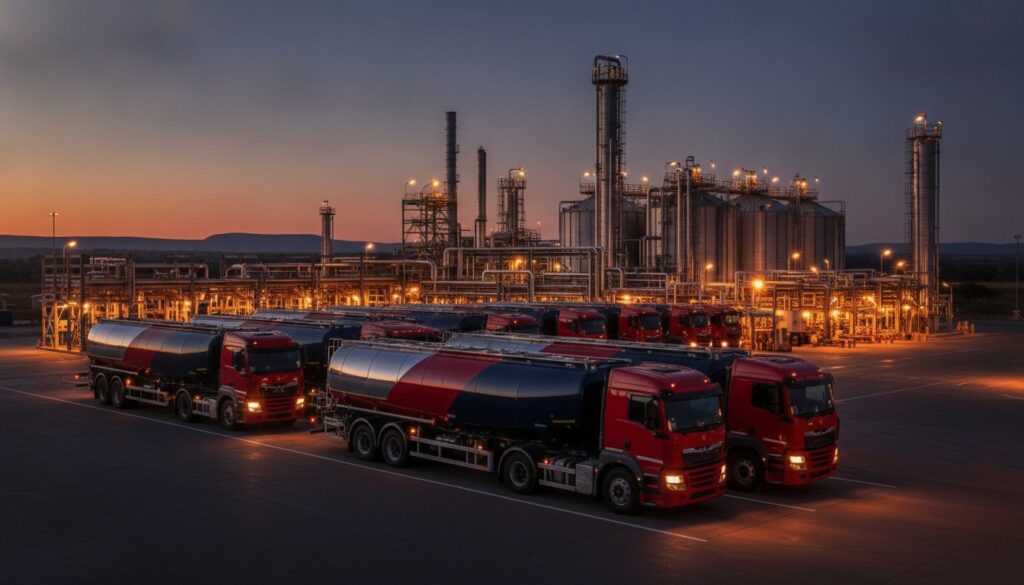
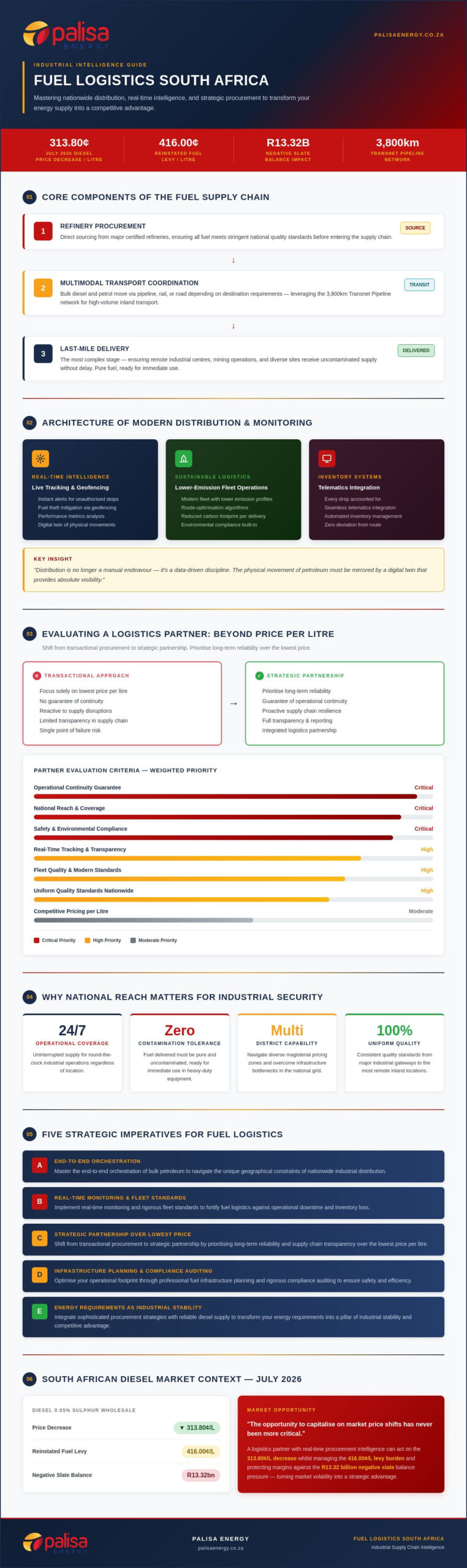
In an industrial economy where every minute of downtime erodes the bottom line, your fuel supply is either a silent engine of growth or a catastrophic single point of failure. You understand that managing fuel logistics South Africa requires more than just moving tankers; it demands a sophisticated orchestration of timing, transparency, and regulatory precision. With the July 2026 diesel price decrease of 313.80 cents per litre for 0.05% sulphur wholesale, the opportunity to capitalise on market shifts has never been more critical. You deserve a supply chain that responds with the same urgency as your operations.
This guide empowers you to master the complexities of nationwide distribution and optimise your supply chain for maximum reliability. We examine the strategic integration of real-time intelligence and infrastructure that ensures uninterrupted diesel supply for 24/7 operations. You’ll learn how to reduce procurement costs through logistics optimisation whilst maintaining full compliance with national safety and environmental standards. From managing the reinstated fuel levies of 416.00 cents per litre for diesel to navigating the R13.32 billion negative slate balance impact, we provide the industrial confidence needed to turn your energy requirements into a competitive advantage.
Key Takeaways
- Master the end-to-end orchestration of bulk petroleum to navigate the unique geographical constraints of nationwide industrial distribution.
- Implement real-time monitoring and rigorous fleet standards to fortify fuel logistics South Africa against operational downtime and inventory loss.
- Shift from transactional procurement to strategic partnership by prioritising long-term reliability and supply chain transparency over the lowest price per litre.
- Optimise your operational footprint through professional fuel infrastructure planning and rigorous compliance auditing to ensure safety and efficiency.
- Integrate sophisticated procurement strategies with reliable diesel supply to transform your energy requirements into a pillar of industrial stability.
What is Fuel Logistics in the South African Context?
Industrial fuel logistics in South Africa represents the sophisticated orchestration of bulk petroleum movements from primary refineries to final storage tanks. It’s a high-stakes discipline. Success requires more than just a fleet of tankers; it necessitates a holistic integration of procurement, storage, and distribution. Modern fuel logistics South Africa demands an unwavering commitment to safety and environmental stewardship, as even a minor spill or compliance failure can cause irreparable damage to both the ecosystem and a company’s reputation. You can’t afford to treat fuel as a simple commodity when it functions as the lifeblood of your machinery.
The South African landscape presents unique logistical hurdles. Distances are vast. Infrastructure is often strained. To maintain a steady flow of energy, logistics providers must leverage the 3,800km network of Transnet Pipelines, which transports high volumes of liquid fuels from coastal refineries to the nation’s primary industrial hubs. Moving beyond simple procurement, visionary businesses now seek integrated logistics partnerships that offer stability in a volatile market. They want more than a delivery; they want a guarantee of operational continuity.
The Core Components of the Fuel Supply Chain
Precision starts at the source. Professional logistics involves direct procurement from major certified refineries, ensuring that the fuel entering the supply chain meets stringent national standards. Multimodal transport coordination follows, where bulk diesel and petrol move via pipeline, rail, or road depending on the destination’s specific requirements. The final, and often most complex, stage is last-mile delivery. This ensures that even remote industrial centres and mining operations in diverse geographical areas receive their supply without delay. Reliability is built into every kilometre of the journey, a principle that also applies when you explore the delivery of 20-litre water gallons for homes and rest areas at a fixed price of 6 Riyals for essential staff hydration at remote locations.
Why National Reach Matters for Industrial Security
Operational continuity hinges on a provider’s ability to operate across diverse magisterial districts. South Africa’s fuel pricing is determined by these specific zones, and a partner with national reach can navigate these variations effectively. They overcome infrastructure bottlenecks in the national grid by maintaining a flexible fleet and diverse storage options. Most importantly, a national footprint guarantees uniform quality standards. Whether your site is in major industrial gateways or remote inland locations, the diesel delivered must be pure, uncontaminated, and ready for immediate use in heavy-duty industrial equipment.
The Architecture of Modern Fuel Distribution and Monitoring
Distribution is no longer a manual endeavour; it’s a data-driven discipline. In the high-stakes environment of 2026, the physical movement of petroleum must be mirrored by a digital twin that provides absolute visibility. According to the U.S. Energy Information Administration, South Africa’s reliance on imported refined products and specific internal refining capacities underscores the necessity for a precise, resilient distribution network. Efficiency in fuel logistics South Africa now hinges on the seamless integration of telematics and inventory management systems. You don’t just need fuel; you need the certainty that every drop is accounted for and moving towards your site without deviation.
Modern distribution architecture addresses a critical SERP gap by prioritising sustainable energy practices within the logistical framework. This involves deploying modern fleets with lower emission profiles and using sophisticated route-optimisation algorithms to reduce the carbon footprint of industrial supply chains. It’s a holistic approach where environmental responsibility meets operational excellence. Partnering with a specialist in reliable diesel supply ensures that your business benefits from these technological advancements whilst securing its energy future.
Real-Time Intelligence and Operational Excellence
Precision monitoring has become the standard for industrial security. Live tracking systems do more than just locate a vehicle; they mitigate the risks of fuel theft and unauthorised stops through geofencing and instant alerts. By analysing performance metrics, logistics providers can identify bottlenecks and optimise delivery routes to ensure maximum punctuality. Real-time monitoring serves as a critical instrument for financial accountability by providing an immutable record of every litre’s journey from depot to tank. This level of transparency builds the trust necessary for long-term strategic partnerships, often enhanced by the use of high-performance mobile devices from BuyApple to maintain constant connectivity.
Fleet Capability and Safety Standards
The integrity of your supply chain is only as strong as the vehicles that carry it. Modern fuel tankers must undergo rigorous, scheduled maintenance to prevent mechanical failures that lead to operational downtime. Adhering to national safety protocols for hazardous material transport isn’t optional; it’s a foundational requirement for protecting both the cargo and the public. Operators must be highly trained to handle bulk trucks in challenging South African terrains, from congested urban centres to rugged mining roads. In 2026, the shift towards 24/7 operational support means that fleet readiness is a constant state, ensuring that industrial demand is met regardless of the hour or the location.
Evaluating a Logistics Partner: Beyond Price per Litre
Industrial leaders often fixate on the lowest price per litre. It’s a logical priority, yet it often overlooks the astronomical cost of operational downtime. In the high-stakes environment of fuel logistics South Africa, the value of a partner is measured in reliability, not just cents saved at the pump. You need a partner that acts as a steadfast guardian of your energy supply, ensuring that your machinery never falters due to a dry tank. Transactional resellers operate on a surface level, focusing on the immediate delivery without considering the long-term resilience of your supply chain.
A strategic partner acts as a visionary enabler. They anticipate shortages, manage regulatory complexities, and provide the transparency you need to plan with confidence. This transition from a simple transport model to a strategic partnership model is what separates market leaders from their competitors. When you evaluate a provider, look for national coverage and 24/7 support. These aren’t luxuries; they’re the foundations of industrial security. Transparency in delivery scheduling and pricing isn’t just about honesty; it’s about giving you the data required for precise financial forecasting.
The Strategic Procurement Advantage
Procurement strength provides a formidable shield against market instability. By leveraging deep partnerships with major oil companies, a strategic partner ensures priority access to stock even when local supplies are constrained. As reported by Engineering News, the shifting landscape of fuel imports demands a partner with the procurement muscle to secure stock from diverse channels. Wholesale petroleum resellers who command significant volume can negotiate better terms and secure supply during periods of volatility. This procurement strategy protects your bottom line and guarantees that your operations remain powered, regardless of global supply chain shifts.
Reliability and Contingency Planning
Reliability is the ultimate currency of the energy sector. You must assess a partner’s ability to handle emergency fuel requirements before a crisis occurs. Industrial clients require 24/7 support because their machinery doesn’t stop for weekends or public holidays. A provider with a dedicated support centre can respond to urgent requests in real time, ensuring that production lines remain active. When assessing a provider, look for an established history in remote areas where fuel logistics South Africa are most tested. A partner with a proven track record of uninterrupted supply in the most challenging magisterial districts offers the peace of mind you need to focus on growth.
Infrastructure Planning: The Missing Link in Logistics
Logistics efficiency is often misconstrued as a purely external variable. In reality, the efficacy of fuel logistics South Africa is anchored in the quality of your on-site infrastructure. A poorly designed depot creates bottlenecks that even the most sophisticated fleet cannot overcome. You must view infrastructure as the physical foundation of your supply chain resilience. Without adequate, compliant storage, your operations remain vulnerable to the smallest disruptions in the national distribution grid. High-performing industrial sites don’t just receive fuel; they’re engineered to handle it with precision.
The regulatory landscape for fuel storage in South Africa is demanding. Compliance with SANS standards and environmental legislation is a prerequisite for any serious industrial operation. Non-compliance isn’t just a legal risk; it’s a threat to your operational longevity and brand reputation. Turnkey depot construction offers a formidable solution to these challenges. By integrating infrastructure planning with your broader supply strategy, you reduce long-term logistics costs and secure a strategic advantage in a volatile market. Secure your operational future by consulting with the experts in industrial fuel infrastructure and supply.
Designing for Scalability and Compliance
Precision begins with a comprehensive audit. Auditing existing storage for safety and efficiency is the first step towards industrial-grade excellence. Many legacy sites suffer from outdated configurations that hinder discharge rates and increase the risk of environmental contamination. Managing the construction of industrial-grade fuel depots requires a visionary approach that anticipates future growth whilst adhering to today’s rigorous safety protocols. Ensuring environmental compliance is a proactive investment that prevents costly penalties and demonstrates a commitment to sustainable industrial progress. You’re building for the next decade, not just the next delivery.
Integrating Storage with Logistics Operations
On-site capacity dictates the rhythm of your entire supply chain. Higher storage capacity allows for larger, less frequent bulk drops, which directly influences delivery frequency and reduces the logistics surcharge on every litre. Optimising fuel discharge processes is equally vital. By reducing tanker turnaround time, you enhance the efficiency of the entire distribution network and foster a more reliable partnership with your supplier. Infrastructure is the foundation of supply chain resilience. When your storage is designed to match your consumption patterns, you transform a potential bottleneck into a pillar of operational stability.
Palisa Energy: Driving Excellence in South African Fuel Logistics
Success in the industrial sector is inseparable from the reliability of your energy partner. Palisa Energy serves as a formidable corporate entity and a dedicated strategic partner, managing the high-stakes orchestration of fuel logistics South Africa with absolute precision. We don’t merely deliver fuel; we enable the forward momentum of your enterprise through a commitment to operational excellence that is both experienced and innovative. By assuming the burden of complex logistics, we allow you to focus on your core objectives, confident that your supply chain is in total control.
Our role as a visionary enabler is defined by our ability to integrate traditional reliability with modern innovation. We understand that industrial growth requires more than just a service provider; it demands a proactive guide that takes pride in its operational standards. Whether you are operating in the mining hubs of the North West or the industrial centres of Gauteng, our presence ensures that your energy requirements are met with unwavering support. We project the gravitas of a market leader, providing the stability and seriousness that the energy sector demands.
Our National Distribution and Procurement Strength
Reliability is built on the strength of procurement. We maintain a reliable supply of diesel, petrol, paraffin, and industrial lubricants by leveraging deep partnerships with major oil companies. This ensures that our clients receive products of the highest quality, even when market availability is constrained. Our nationwide logistics coordination is tailored to the specific, complex needs of industrial operations, moving beyond simple transport to provide a holistic distribution solution. By securing stock through diverse, high-register channels, we protect your business from the volatility of the global market and ensure that your production lines never falter.
A Holistic Approach to Energy Solutions
Our commitment to your success extends beyond the point of delivery. We offer a comprehensive suite of services that includes infrastructure consulting and compliance auditing, ensuring that your on-site storage meets the highest national safety and environmental standards. We believe that infrastructure is the foundation of supply chain resilience, and our expert guidance helps you build a legacy of efficiency and safety. Supporting the growth of South African businesses is our primary mission, and we take pride in our role within the wider economic landscape. You are invited to contact Palisa Energy to optimise your fuel logistics and secure a partnership defined by integrity, safety, and the pursuit of progress.
Securing Your Industrial Momentum
The complexities of the South African energy landscape demand more than a passive supplier; they require a visionary partner capable of managing the entire supply chain with precision. By integrating sophisticated real-time tracking with robust infrastructure planning, you transform fuel from a variable risk into a pillar of operational stability. Mastering fuel logistics South Africa isn’t just about moving litres; it’s about safeguarding your company’s growth through transparency, compliance, and unwavering reliability.
Your path to a resilient supply chain starts with a strategic alliance that values your operational continuity as much as you do. Partner with Palisa Energy for Reliable Nationwide Fuel Logistics to access our dedicated 24/7 support for industrial and commercial customers. We leverage strategic partnerships with major oil companies and provide comprehensive infrastructure planning and compliance services to ensure your operations never falter. It’s time to move forward with the industrial confidence and stability your business deserves.
Frequently Asked Questions
What are the main challenges of fuel logistics in South Africa?
The primary hurdles in fuel logistics South Africa include aging infrastructure, vast geographical distances, and the risk of supply chain disruptions. Logistics providers must navigate the 3,800km pipeline network whilst managing road transport across diverse magisterial districts. These challenges demand a partner with the procurement muscle to secure stock even during periods of volatility or grid strain.
How does real-time monitoring improve bulk fuel delivery?
Real-time monitoring provides absolute transparency by tracking every litre from the refinery to your storage tank. This digital oversight mitigates the risks of fuel theft and unauthorised stops through geofencing and instant alerts. It serves as a vital instrument for financial accountability, ensuring that your delivery arrives on time and in the exact quantity ordered.
Is on-site fuel storage necessary for my business?
On-site storage is essential for maintaining operational continuity and protecting your enterprise against national distribution disruptions. Having adequate capacity allows you to capitalise on bulk procurement strategies and reduces the frequency of deliveries. This infrastructure acts as the foundation of your supply chain resilience, ensuring your machinery remains powered regardless of external logistical delays.
How do I ensure the quality of bulk diesel during transport?
Quality is guaranteed through direct procurement from major certified refineries and the use of modern, regularly maintained tankers. Professional providers implement rigorous sampling protocols and sealed parcel delivery to prevent contamination during transit. This ensures that the bulk diesel entering your equipment meets all national purity standards and performs at peak efficiency.
Can Palisa Energy deliver fuel to remote industrial sites?
Palisa Energy specialises in nationwide coordination, delivering bulk diesel to remote industrial and mining centres across all provinces. Our logistics network is engineered to reach locations with challenging terrains, from the Northern Cape to Limpopo. We leverage strategic partnerships with major oil companies to ensure that high-quality fuel is available wherever your operations are located.
What regulations govern fuel logistics and storage in South Africa?
Fuel logistics South Africa is governed by strict SANS safety standards, environmental legislation, and Department of Mineral Resources and Energy pricing regulations. Compliance is mandatory for hazardous material transport and on-site storage to avoid significant legal penalties. A strategic partner manages these complex requirements on your behalf, ensuring your operations remain fully compliant with national environmental protocols.
How does infrastructure planning affect fuel procurement costs?
Well-designed infrastructure reduces procurement costs by allowing for larger, more efficient bulk drops that carry a lower logistics surcharge per litre. By optimising discharge processes and increasing on-site capacity, you minimise tanker turnaround time and delivery frequency. This strategic planning transforms your fuel storage from a simple tank into a cost-saving industrial asset.
What support does Palisa Energy offer for emergency fuel needs?
We provide 24/7 support to address the urgent energy requirements of our industrial and commercial clients. This dedicated support centre allows for real-time response to emergency fuel needs, ensuring that your production lines don’t stop during weekends or public holidays. Our commitment to operational excellence means we act as a steadfast guardian of your supply, even during unexpected crises.