

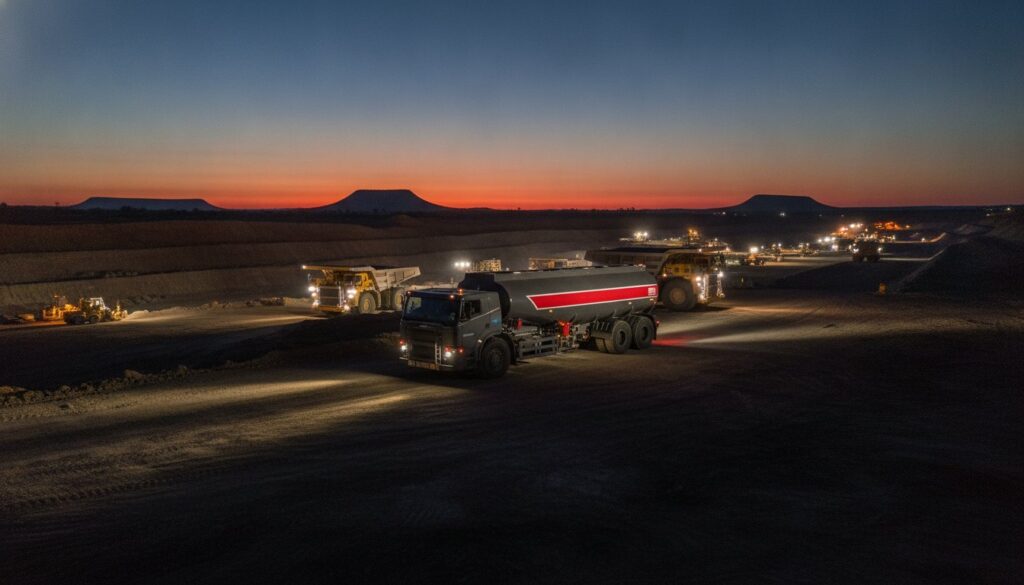
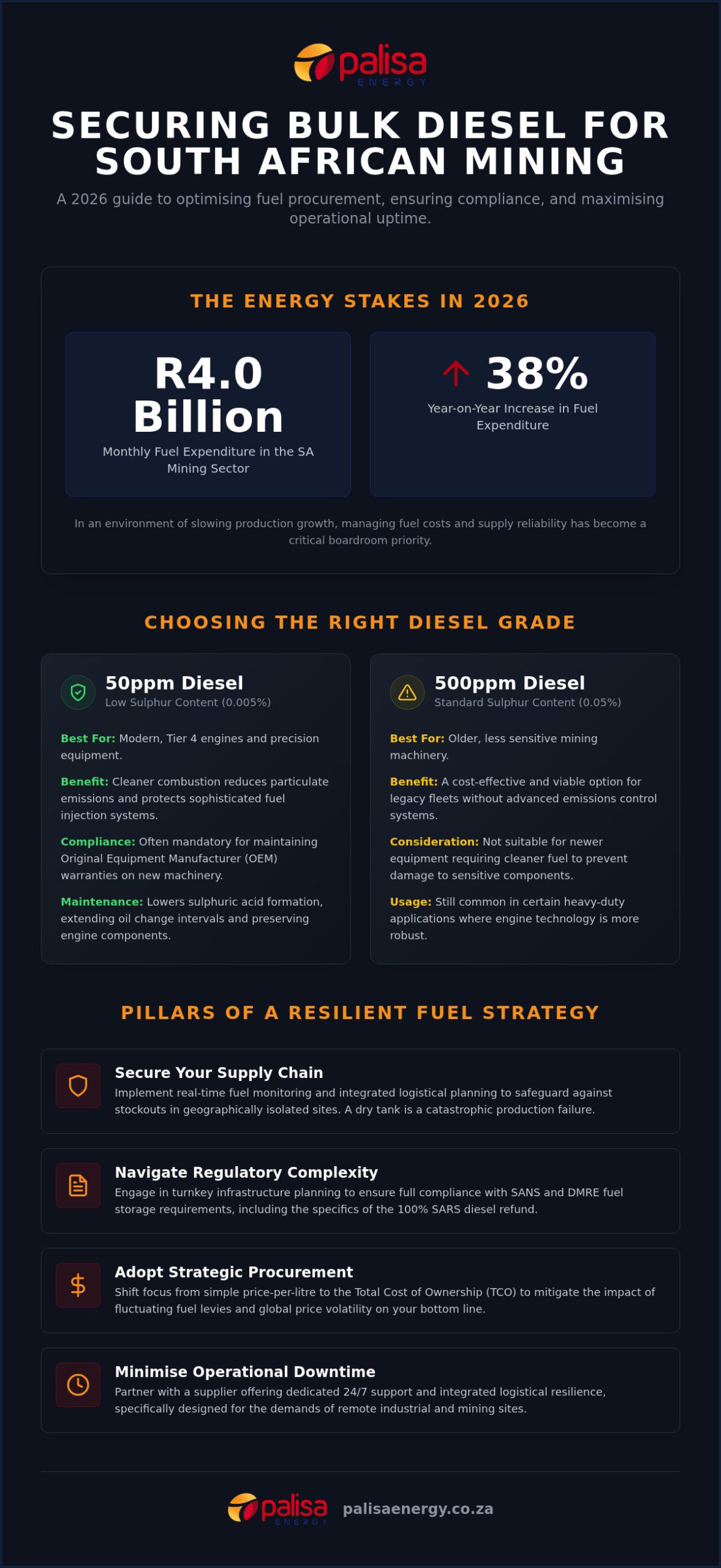
With monthly fuel expenditure in the South African mining sector reaching approximately R4.0 billion in April 2026, a staggering 38% year-on-year increase, the margin for logistical error has effectively vanished. You understand that in an environment where mining production growth has recently slowed, the stability of your energy supply dictates the viability of your entire project. Securing reliable bulk diesel for mining operations South Africa is no longer a simple procurement task; it’s a high-stakes exercise in risk mitigation and regulatory precision.
This 2026 guide promises to equip you with the expertise needed to navigate fluctuating costs and complex storage mandates, ensuring your machinery never falls silent due to a preventable stockout. We’ll explore the latest SANS compliance requirements for turnkey infrastructure, the nuances of the 100% SARS diesel refund, and the strategic partnerships that underpin a resilient, 24/7 supply chain. By aligning operational excellence with rigorous procurement standards, your organisation can maintain its forward momentum despite the volatility of the global energy market.
Key Takeaways
- Understand the technical nuances between 50ppm and 500ppm diesel to optimise machinery performance whilst meeting 2026 environmental standards.
- Secure your supply chain against geographical isolation by implementing real-time monitoring for bulk diesel for mining operations South Africa.
- Navigate complex regulatory landscapes with turnkey infrastructure planning that ensures full compliance with SANS and DMRE fuel storage requirements.
- Transition towards a strategic procurement model that focuses on the total cost of ownership to mitigate the impact of fluctuating fuel levies and global price volatility.
- Minimise operational downtime through integrated logistical resilience and dedicated 24/7 support structures designed for remote industrial sites.
The Critical Role of Bulk Diesel in South African Mining Operations
The South African mining industry remains the bedrock of the national economy, yet its continued success hinges on a single, vital input: energy. With monthly fuel expenditure across the sector reaching approximately R4.0 billion as of April 2026, the management of energy resources has shifted from a back-office procurement task to a critical boardroom priority. Bulk diesel serves as the primary energy driver, providing the immense torque and endurance required to sustain 24/7 operations in some of the world’s most demanding environments. It is the lifeblood that keeps the wheels of production turning.
Relying on a simple transactional vendor in this high-stakes environment is a precarious strategy. When the success of a multi-billion rand enterprise depends on the constant movement of earth and ore, you require a strategic fuel partner who understands that a dry tank is not just a logistical delay; it’s a catastrophic failure of the production chain. Securing a reliable supply of bulk diesel for mining operations South Africa requires a partner capable of managing the volatility of the 2026 energy landscape with industrial precision. This partnership ensures that fuel stockouts, which pose a terminal risk to production targets, are mitigated through foresight and logistical resilience.
Powering Heavy-Duty Mining Machinery
The sheer scale of modern mining equipment, from massive hydraulic excavators to ultra-class haul trucks and sophisticated drill rigs, necessitates a fuel supply that is both voluminous and uncompromising in quality. These machines are engineered to operate under extreme loads, and their performance is inextricably linked to the purity of the diesel they consume. Any deviation from technical specifications can lead to inefficient combustion and reduced power output. Maintaining the highest standards of fuel purity ensures that internal components remain free from abrasive contaminants, thereby preventing the premature engine wear that leads to expensive, unscheduled maintenance cycles.
The Economic Impact of Operational Downtime
With mining production growth decelerating to 2.5% in March 2026, every hour of lost activity carries a compounded financial penalty. Idle machinery represents a wasted capital investment, yet the costs extend far beyond the machines themselves. Fuel shortages disrupt the entire logistical flow of the mine, causing missed production targets and jeopardising long-term export contracts. Reliable fuel security is the shield that protects a mine’s global competitiveness, allowing operators to meet their annual production forecasts with absolute certainty. In a market defined by thin margins and rising levies, a resilient supply chain is the only way to safeguard the economic health of the operation.
Technical Specifications: Choosing the Right Diesel Grade
Fuel selection is no longer a generic procurement line item; it’s a technical decision that directly impacts the mechanical integrity of your fleet. In the 2026 regulatory environment, ensuring that your supply adheres to SANS 342 standards is the baseline for operational safety. When procuring bulk diesel for mining operations South Africa, the choice between 50ppm and 500ppm sulphur content is often dictated by the age and sophistication of your machinery. High-quality fuel isn’t just about combustion. It’s about protecting the sophisticated fuel injection systems that drive modern mining productivity.
50Ppm vs 500ppm Diesel for Mining
The primary distinction between these grades lies in their sulphur content, with 50ppm containing 0.005% and 500ppm containing 0.05%. Whilst 500ppm remains a viable option for older, less sensitive machinery, the precision engineering of modern Tier 4 engines demands the cleaner combustion profile of 50ppm diesel. According to reports from the Minerals Council South Africa, the shift towards sustainable mining practices has accelerated the adoption of cleaner energy sources to reduce particulate emissions. Beyond environmental stewardship, 50ppm diesel is often a mandatory requirement for maintaining OEM warranties on new haul trucks and excavators. The reduced sulphur levels significantly lower the formation of sulphuric acid during combustion, which preserves the alkalinity of industrial lubricants and extends the intervals between oil changes.
Ensuring Fuel Purity and Quality Assurance
In remote mining environments, the risk of fuel contamination is a constant threat to engine health. Water ingress, microbial growth, and sediment accumulation can lead to clogged filters and catastrophic injector failure. Quality assurance must begin at the point of origin and continue through every stage of the logistics chain. Palisa Energy maintains strategic partnerships with major oil companies to ensure that every litre delivered meets rigorous purity specifications. We implement standard testing protocols at the delivery site, verifying density and checking for contaminants before the fuel enters your storage tanks. This meticulous approach to quality control prevents the premature wear of critical engine components and ensures that your machinery operates at peak thermal efficiency. Partnering with a provider that prioritises these stringent testing protocols is essential for operational longevity, which is why many industry leaders choose Palisa Energy for their diesel supply. By integrating real-time monitoring and strict adherence to SANS 342, we act as the steadfast guardian of your fleet’s mechanical performance.
Logistics and Supply Chain Resilience for Remote Sites
The logistical architecture of the South African mining sector is defined by vast distances and often unforgiving terrain. For procurement officers, the primary challenge isn’t merely purchasing energy; it’s ensuring that bulk diesel for mining operations South Africa arrives at geographically isolated extraction pits without disruption. Infrastructure gaps and transport hurdles require more than just a delivery fleet. They demand a synchronised logistical strategy that anticipates bottlenecks before they manifest. In a sector where production growth recently decelerated to 2.5% in early 2026, the resilience of your supply chain is the difference between operational momentum and stagnation.
Strategic coordination is the only way to overcome the inherent risks of nationwide fuel distribution. This involves more than simple transport. It requires a deep understanding of the national road network and the ability to pivot when traditional routes are compromised. By positioning ourselves as a steadfast guardian of your site’s energy needs, we manage the complexities of moving high volumes of hazardous materials so your team can focus on core extraction activities. Reliability in this context isn’t an aspiration; it’s a non-negotiable standard that underpins the entire mining value chain.
Nationwide Distribution and Logistics Coordination
Reaching the most remote extraction sites requires a resilient supply chain built on strategic partnerships with major oil companies. Our logistics network utilises specialised fuel tankers designed to navigate the challenging terrain typical of deep-level and opencast mining environments. To maintain production continuity, it’s essential to understand how to source bulk diesel South Africa through a provider that prioritises nationwide reach over local convenience. This proactive coordination ensures that even when regional infrastructure fails, your energy supply remains uncompromised. We leverage our national footprint to maintain a constant flow of fuel, regardless of the site’s proximity to major industrial hubs.
Real-Time Monitoring and 24/7 Support
Visibility is the cornerstone of effective procurement in the 2026 energy landscape. In a high-stakes industry where idle machinery results in rapid financial erosion, procurement officers require more than a delivery date; they need granular data that informs their stock management strategies. We implement real-time monitoring technology to track every fuel shipment across the country, providing the data-driven transparency needed to manage inventory with precision. Constant communication between our logistics centre and your site manager prevents delivery delays and eliminates the risk of stockouts. Palisa Energy’s commitment to operational excellence is evidenced by our 24/7 industrial support, which acts as a safeguard for continuous mining operations. We don’t just deliver fuel; we provide the professional oversight required to keep your project moving whilst others are stalled by logistical uncertainty.
Mining Fuel Infrastructure: Planning and Compliance
Operational resilience in the extraction sector depends on more than just delivery schedules; it requires a physical foundation of robust on-site storage. As the South African mining industry faces significant cost pressures in 2026, the ability to buffer against supply fluctuations through strategic infrastructure has become a competitive necessity. Designing and maintaining a high-capacity fuel depot ensures that bulk diesel for mining operations South Africa is always available, even during peak demand or logistical bottlenecks. This infrastructure serves as a strategic reserve, allowing mines to maintain 24/7 production cycles without the constant anxiety of a dry tank.
Effective infrastructure planning moves beyond simple tank installation. It involves a holistic approach to energy management that integrates safety, environmental protection, and operational efficiency. By scaling your storage capacity in alignment with your production forecasts, you create a buffer that protects your margins from the record increases in producer price inflation seen in early 2026. A well-designed depot is an investment in long-term stability and a safeguard against the catastrophic risks of fuel stockouts.
Turnkey Fuel Depot Design and Construction
Engineering a storage solution requires a precise understanding of a mine’s specific scale and energy throughput. We provide comprehensive turnkey support that manages the entire lifecycle of a project, from initial site assessment and engineering design to final construction and compliance sign-off. This integrated approach allows for the seamless inclusion of specialised storage for industrial lubricants, ensuring that all vital fluids are housed in a centralised, secure location. By managing the construction process with industrial precision, we ensure that your facility is ready to scale amongst your operations, providing the unwavering support needed for sustainable growth.
Regulatory Compliance and Safety Standards
Navigating the complex regulatory landscape of the Department of Mineral Resources and Energy (DMRE) is a critical component of infrastructure management. In 2026, compliance with SANS 10089-1 for above-ground storage remains the gold standard, requiring bunding that can contain at least 110% of the largest tank’s volume to prevent environmental contamination. These protocols, alongside strict fire safety and spill containment measures, are essential for protecting both your workforce and the surrounding ecosystem. Adherence to the National Environmental Management Act (NEMA) isn’t optional; it’s a foundational requirement for any modern mining operation. Regular compliance audits are mandatory for the retention of mining licenses and the mitigation of operational risk. To ensure your site meets these stringent standards, partner with Palisa Energy for turnkey infrastructure planning that guarantees full regulatory alignment from day one.
Strategic Procurement: Optimising Fuel Costs and Security
Strategic procurement in the 2026 mining sector requires a fundamental shift from monitoring price-per-litre to managing the total cost of ownership (TCO). Whilst the headline fuel price is a significant variable, the hidden costs of logistical failures, equipment downtime, and non-compliance often exert a greater impact on the bottom line. Developing a sophisticated procurement strategy involves more than just securing a supply; it requires the integration of fuel logistics into your broader enterprise risk management framework. By treating energy as a strategic asset rather than a simple commodity, mining houses can build the resilience needed to withstand global market shocks.
Long-term supply contracts serve as a primary tool for achieving this stability. These agreements provide a guaranteed volume of bulk diesel for mining operations South Africa, ensuring that production remains uninterrupted even during periods of national or global supply tightening. As your steadfast guardian in the energy sector, we move beyond the role of a vendor to act as a proactive partner. We focus on the continuity of your operations, ensuring that every litre delivered contributes to your mine’s forward momentum and long-term viability.
Managing Fuel Cost Volatility
The global petroleum market in 2026 remains characterised by significant volatility, as evidenced by the diesel price adjustments effective 5 August 2026, where 0.05% sulphur diesel increased by 138.44 cents per litre. Navigating these fluctuations requires a deep understanding of the regulated pricing components in South Africa, including the General Fuel Levy of R3.93 per litre and the Slate Levy, which recently decreased to 61 cents per litre. Leveraging bulk buy advantages allows mining operations to hedge against these sudden spikes and protect their operational margins. By securing large-scale deliveries when the Basic Fuel Price (BFP) is favourable, procurement officers can maintain a more predictable cost structure amidst shifting geopolitical influences.
Partnering with Palisa Energy for Operational Growth
Operational growth depends on a transparent and dependable energy partnership. We structure our infrastructure planning and logistics fees with absolute clarity, ensuring that executive stakeholders can accurately forecast expenditure without the risk of hidden costs. Having a single point of contact for your nationwide fuel and lubricant requirements simplifies the procurement chain, reducing administrative overhead and improving response times during critical periods. Our role is to manage the complex logistical and regulatory requirements of the energy sector so you don’t have to. Secure your mining operations with reliable fuel logistics from Palisa Energy and ensure your project has the energy security required to thrive in the years ahead.
Securing Sustainable Momentum for Your Mining Operations
Navigating the 2026 energy landscape requires a transition from reactive procurement to proactive strategic management. By prioritising technical fuel purity and ensuring your on-site infrastructure meets the latest SANS and DMRE compliance standards, you safeguard your machinery against premature wear and your project against regulatory risk. Reliability in the supply of bulk diesel for mining operations South Africa is the foundation upon which your production targets are built; it’s a critical component that demands a partner capable of managing complex nationwide logistics with industrial precision.
Success in this sector is defined by the ability to maintain 24/7 momentum despite global price volatility. We provide the comprehensive nationwide distribution network and turnkey infrastructure planning necessary to keep your fleet operational in even the most remote locations. With our 24/7 strategic industrial support, you gain a dedicated partner committed to your site’s safety and efficiency. Partner with Palisa Energy for Nationwide Mining Fuel Security and ensure your organisation remains at the forefront of the industry. Your operational excellence is our primary mission.
Frequently Asked Questions
What are the primary regulations for on-site bulk diesel storage in South Africa?
Storage must comply with SANS 10089-1, which requires bunding to hold at least 110% of the largest tank’s volume. Facilities must also adhere to the National Environmental Management Act (NEMA) to prevent contamination. Depending on the volume, a license under the Petroleum Products Act, administered by the Department of Mineral Resources and Energy (DMRE), is mandatory. These standards ensure that your site remains safe, compliant, and environmentally responsible.
How does 50ppm diesel improve mining machinery longevity?
50ppm diesel contains significantly less sulphur than 500ppm variants, which reduces the formation of corrosive sulphuric acid during combustion. This protection is vital for modern high-pressure fuel injection systems found in Tier 4 mining engines. By maintaining the alkalinity of lubricants, 50ppm fuel extends the interval between maintenance cycles and prevents the premature wear of critical internal components, ultimately lowering your total cost of ownership and reducing downtime.
Can Palisa Energy provide 24/7 delivery to remote mining locations?
We provide 24/7 operational support and nationwide delivery to ensure your mining machinery never falls silent due to a stockout. Our logistics network is specifically engineered to navigate the challenging terrain of remote South African mining sites. By maintaining a constant flow of bulk diesel for mining operations South Africa, we act as a steadfast guardian of your production targets, providing reliability in even the most geographically isolated environments.
What is included in a turnkey fuel depot construction project?
A turnkey project encompasses the entire lifecycle of fuel infrastructure, from initial engineering design to final compliance sign-off. This includes the installation of SANS-compliant storage tanks, bunding, and high-precision dispensing systems. We also integrate specialised storage for industrial lubricants and real-time monitoring technology. By managing the construction process from start to finish, we ensure your facility meets all DMRE and environmental safety standards without requiring your internal management’s constant oversight.
How do you ensure the quality of diesel delivered to mining sites?
Quality assurance is maintained through strategic partnerships with major oil companies and rigorous on-site testing protocols. Every delivery undergoes verification for density and a check for contaminants such as water or sediment before it enters your storage tanks. This meticulous approach ensures that all fuel meets SANS 342 standards. By verifying fuel purity at the point of delivery, we prevent the injector failures and efficiency losses associated with contaminated diesel shipments.
What are the benefits of long-term fuel supply contracts for mines?
Long-term contracts offer critical price stability and supply security in a volatile energy market. These agreements guarantee a consistent volume of bulk diesel for mining operations South Africa, protecting your project from the stockouts that can occur during national supply shortages. By locking in strategic procurement terms, mining houses can more accurately forecast their operational expenditure and hedge against the record price increases seen in early 2026, ensuring continuous production.
Does Palisa Energy supply industrial lubricants along with bulk diesel?
We provide a comprehensive range of high-grade industrial lubricants alongside our bulk diesel supply. Managing both fuel and lubricants through a single strategic partner simplifies your procurement chain and ensures that all vital fluids meet the technical specifications of your heavy-duty machinery. This integrated approach allows for better inventory management and ensures that your engines receive the consistent, high-quality lubrication required to operate reliably under extreme industrial loads.
How can real-time monitoring reduce fuel supply chain risks?
Real-time monitoring provides granular visibility into your fuel inventory and the status of incoming shipments. By tracking fuel tankers across the national road network, procurement officers can anticipate potential delays and adjust their stock management strategies accordingly. This data-driven transparency eliminates the guesswork from the supply chain, significantly reducing the risk of stockouts. It allows for more precise coordination between our logistics centre and your on-site team, ensuring uninterrupted production cycles.