

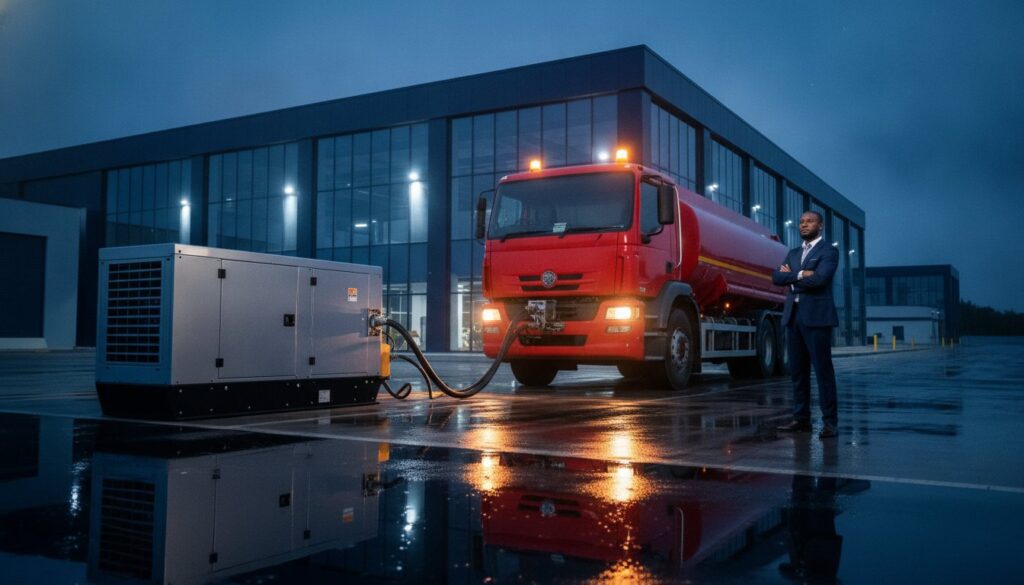
In the high-stakes landscape of South African industry, bulk diesel is no longer merely a fuel source; it’s the fundamental insurance policy for your enterprise’s survival. Securing a reliable supply of bulk diesel for generators South Africa has become a strategic necessity for leaders who refuse to leave their operational uptime to chance. You likely recognise that whilst the national grid has shown remarkable resilience with 399 consecutive days without loadshedding as of mid-2026, the underlying vulnerabilities of an import-dependent supply chain remain a constant threat to your stability.
We understand the frustration of unpredictable delivery schedules and the looming risk of fuel contamination that can lead to catastrophic generator failure during critical moments. This guide promises to empower you with the strategies needed to secure, manage, and optimise your fuel supplies to ensure your enterprise remains operational regardless of energy fluctuations. We will examine how to achieve lower costs per litre through sophisticated procurement, maintain strict compliance with South African safety standards, and select a partner that manages complex logistics with unwavering precision so you don’t have to.
Key Takeaways
- Understand how to transition your fuel supply from a reactive expense to a strategic asset that guarantees operational continuity.
- Identify the technical advantages of 50ppm over 500ppm diesel to preserve the longevity and efficiency of modern generator engines.
- Learn to optimise your bottom line by leveraging bulk diesel for generators South Africa; compare the cost-efficiency of large-scale loads against ad-hoc refuelling.
- Implement rigorous on-site management protocols to prevent fuel degradation and microbial growth to ensure your reserves remain ready for immediate deployment.
- Discover the critical criteria for selecting a strategic fuel partner capable of providing national logistics support and 24/7 industrial uptime.
The Critical Role of Bulk Diesel in South Africa’s Energy Landscape
Energy reliability defines the boundary between industrial growth and stagnation. In 2026, whilst the national grid has achieved significant periods of stability, the memory of previous volatility has permanently altered the corporate psyche. Generators are no longer regarded as secondary redundancies; they’re the primary guardians of productivity. Securing a consistent supply of Diesel fuel is the only way to ensure these engines remain ready to fire at a moment’s notice. For companies operating across the country, the procurement of bulk diesel for generators South Africa represents a fundamental shift from reactive purchasing to proactive energy orchestration.
We view fuel security as a strategic asset rather than a variable expense. When you treat diesel as a commodity to be bought on a whim, you expose your enterprise to the whims of a volatile global market. Conversely, establishing a robust on-site reserve transforms your energy profile into a fortress. The return on investment for bulk fuel storage isn’t found just in the lower cost per litre; it’s found in the thousands of rands saved by preventing a single hour of industrial downtime. Palisa Energy acts as your strategic partner in this endeavour, maintaining national industrial momentum through precision logistics and unwavering support. For industrial firms that value professional presentation as much as operational uptime, you can discover Print It ZA print and packaging for all your high-quality printing requirements.
Fuel Security as a Business Continuity Strategy
Just-in-time refuelling models are inherently fragile in the current energy climate. Relying on immediate delivery during periods of peak demand or global supply disruptions is a gamble that high-output enterprises simply cannot afford. Bulk procurement mitigates this risk by insulating your operations from the immediate shocks of the supply chain. Beyond the logistical safety net, there’s a profound psychological benefit for your staff. A workforce that doesn’t fear a sudden, disruptive shutdown is a workforce that remains focused on excellence, safety, and consistent output.
To further support this environment of professional excellence, many businesses look to enhance their physical workspaces with premium decor and furniture from elevenpast, ensuring their office aesthetics match their operational reliability.
Meeting National Industrial Demands
The scale of diesel consumption in sectors like mining, manufacturing, and healthcare is immense. These industries require a partner that operates with the same level of sophistication and scale as their own operations. Fragmented, localised suppliers often lack the infrastructure to maintain supply during national surges or logistical bottlenecks. Palisa Energy leverages partnerships with major oil companies to ensure reliable upliftment and 24/7 support for our industrial clients. Ensuring your fuel logistics South Africa are managed by experts is the difference between a stalled assembly line and a thriving enterprise. We manage the complexity of the energy sector so you don’t have to, acting as the steadfast guardian of your operational uptime.
Choosing the Right Diesel Grade: 50ppm vs 500ppm
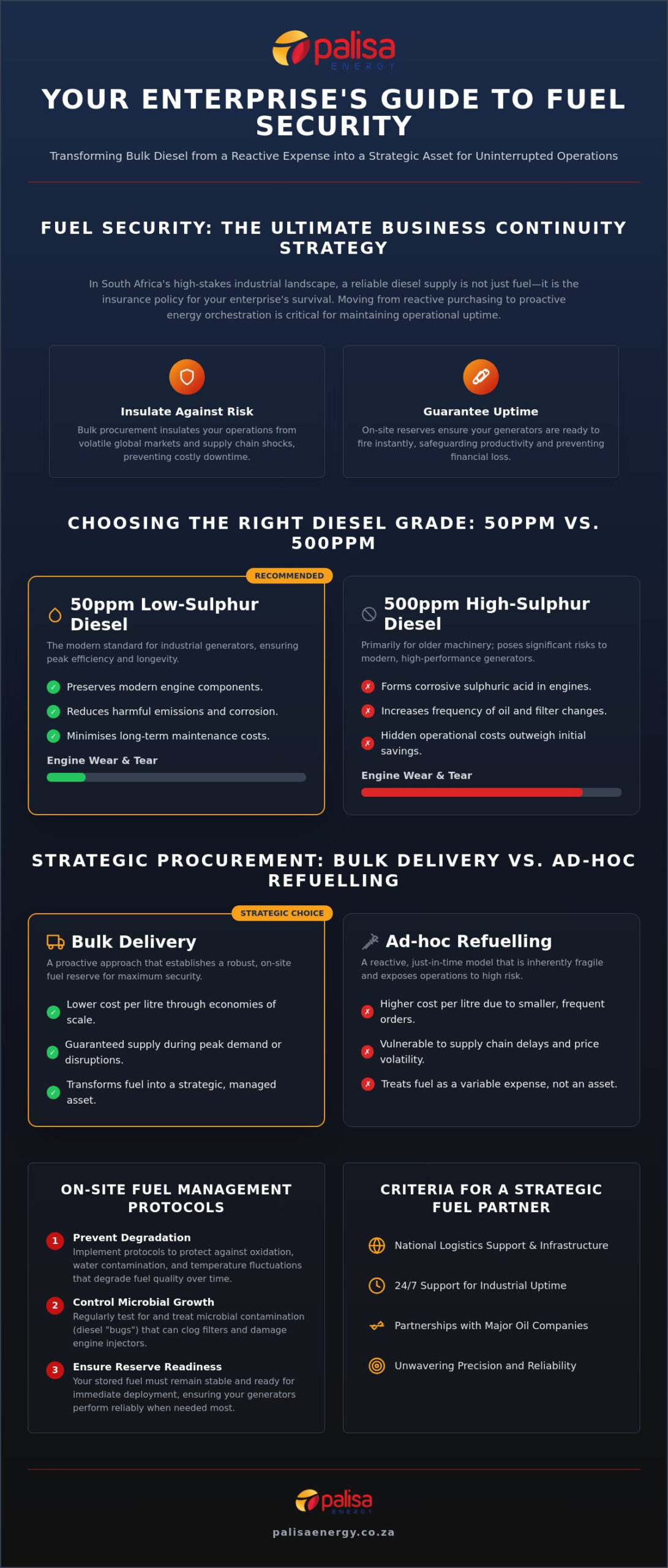
Understanding fuel specifications is the first step in safeguarding your mechanical infrastructure. When procurement managers evaluate options for bulk diesel for generators South Africa, the decision typically rests between 50ppm and 500ppm grades. The term “ppm” refers to “parts per million,” a metric used to quantify the concentration of sulphur within the fuel. Whilst 500ppm remains prevalent in older agricultural machinery, modern industrial generators require the refined purity of low-sulphur alternatives to function at peak efficiency. Choosing the incorrect grade doesn’t just affect emissions; it directly impacts the financial health of your maintenance budget.
The hidden costs of 500ppm diesel often outweigh the marginal savings at the point of purchase. High-sulphur fuels lead to increased engine wear, necessitating more frequent oil changes and filter replacements. Over time, these operational expenses erode the perceived value of cheaper fuel. We ensure that our clients receive high-quality petroleum products sourced directly from major oil company terminals, guaranteeing that the fuel entering your tanks meets the most stringent industrial requirements. If you’re looking to enhance your facility’s reliability, it’s essential to prioritise fuel quality as a core component of your energy strategy.
Technical Impact on Generator Longevity
Sulphur is inherently corrosive. During the combustion process, sulphur oxides combine with moisture to form sulphuric acid, a substance that aggressively attacks internal engine components. This chemical reaction leads to the premature degradation of cylinder liners, bearings, and exhaust systems. Furthermore, modern high-pressure common rail (HPCR) engines are designed with incredibly tight tolerances. 50ppm diesel is the industrial standard for modern generator performance. By utilizing low-sulphur fuel, you protect sensitive injectors and diesel particulate filters from the clogging and carbon build-up that lead to unexpected failure.
Environmental and Compliance Standards
Corporate sustainability has transitioned from a peripheral concern to a core requirement for modern ESG reporting. Using 50ppm diesel significantly reduces the output of harmful particulate matter and sulphur dioxide, aligning your operations with evolving South African emission standards. As the country moves towards the Clean Fuels 2 (CF2) standards in 2027, which will further reduce sulphur limits to 10ppm, adopting 50ppm now ensures your enterprise is prepared for future regulatory shifts. We maintain rigorous upliftment protocols to ensure that every drop of fuel delivered to your site preserves its integrity from the terminal to the generator.
Strategic Procurement: Bulk Delivery vs. Ad-hoc Refuelling
Choosing between ad-hoc refuelling and bulk procurement is a decision that defines the operational resilience of your facility. Whilst small-scale, “on-demand” deliveries might seem flexible, they often mask systemic inefficiencies and higher costs that erode your bottom line. For enterprises requiring bulk diesel for generators South Africa, transitioning to larger loads provides a level of stability that fragmented deliveries cannot match. This approach doesn’t just lower the cost per litre; it significantly reduces the administrative burden of managing hundreds of disparate invoices, allowing your finance team to focus on higher-value tasks.
Transitioning your energy strategy involves a shift in scale. Moving from small refuelling runs to bulk loads, typically ranging from 7,000L to 40,000L, allows for a more controlled and predictable supply chain. We manage these complex logistics with industrial-grade precision, ensuring that your tanks are never depleted during critical periods. By consolidating your fuel needs, you eliminate the “silent” costs of multiple delivery fees and the risk of being deprioritised by suppliers during times of national fuel shortages.
Volume Advantages and Pricing Stability
Bulk procurement acts as a powerful hedge against the inherent volatility of fuel markets. By securing larger volumes at wholesale rates, energy-intensive industries can lock in pricing and protect their operations from sudden fluctuations in the Rand or international crude oil prices. Establishing a partnership with a reliable fuel supplier South Africa ensures that your procurement strategy is backed by consistent upliftment from major oil company terminals. Consider these primary benefits of volume-based procurement:
- Wholesale Cost Efficiency: Significant reduction in the cost per litre compared to retail or small-scale pump prices.
- Operational Predictability: Guaranteed fuel availability for long-duration outages without relying on daily delivery windows.
- Infrastructure ROI: Faster capital recovery on on-site storage tanks through fuel savings and increased uptime.
Whilst the initial investment in on-site storage infrastructure requires capital, the long-term savings are undeniable. A business that maintains its own reserves is a business that controls its own destiny, regardless of grid performance or market shifts.
This sense of control is further amplified when businesses incorporate renewable energy. By using advanced solar technology from Nippon Energy, companies can offset their daytime energy costs, allowing their diesel reserves to serve as a more targeted, long-term security measure against total grid failure.
Logistical Excellence and Nationwide Reach
A national distribution network offers a level of precision that localised, fragmented suppliers simply cannot provide. At Palisa Energy, we understand that energy needs don’t adhere to a nine-to-five schedule. Our 24/7 support structure ensures that mission-critical facilities, such as hospitals and data centres, never face a “dry tank” scenario. Navigating the complexities of emergency bulk diesel delivery South Africa during grid crises requires a partner with the infrastructure to bypass logistical bottlenecks. Through real-time tracking and sophisticated planning, we provide total transparency in every litre delivered, acting as the steadfast guardian of your industrial momentum.
Best Practices for On-Site Generator Fuel Management
Securing a consistent supply of bulk diesel for generators South Africa is a critical first step, but the integrity of your energy reserve depends entirely on how it is managed once it enters your tanks. Stagnant fuel is a liability. Without a rigorous maintenance programme, the very resource intended to safeguard your operations can become the primary cause of mechanical failure. Effective fuel management involves a transition from passive storage to active preservation, ensuring that every litre remains in peak condition for immediate deployment during a grid crisis.
Microbial growth, often referred to as “diesel algae,” is the silent killer of industrial generators. These organisms thrive at the interface where water meets fuel, creating a sludge that rapidly clogs filters and damages sensitive fuel injectors. Preventing this requires a combination of high-grade filtration and regular chemical intervention. We recommend implementing a turnkey infrastructure plan that incorporates automated polishing systems to remove moisture and particulate matter before they can compromise your engines. If you’re ready to fortify your facility, you should consult with our specialists to design a bespoke fuel management protocol.
Preventing Contamination and Degradation
Water is the primary catalyst for fuel degradation. It enters tanks through condensation or during the delivery process, providing the oxygen necessary for microbes to flourish. Utilising high-performance water separators and biocide treatments is essential for maintaining a sterile environment within your storage depot. Regular tank cleaning and sediment removal further protect your mechanical assets by ensuring that only purified fuel reaches the combustion chamber. Diesel stored longer than six months requires stabilisers to maintain SANS compliance. By adhering to these standards, you extend the shelf life of your reserves and avoid the costly consequences of fuel “varnishing” or oxidation.
Infrastructure and Compliance Auditing
Environmental safety and legal compliance are non-negotiable aspects of on-site fuel storage. South African regulations mandate specific containment measures, such as bunded tanks, to prevent soil and groundwater contamination in the event of a leak. A well-designed fuel depot must facilitate rapid refuelling whilst allowing for easy access during maintenance audits. This structured approach ensures that your site meets the latest fuel security for business South Africa standards. We provide the expertise needed to navigate these complex requirements, offering turnkey solutions that scale alongside your operational capacity. Our role as a steadfast guardian means we manage these logistical and regulatory hurdles with precision, allowing you to focus on your core industrial objectives.
Securing Your Enterprise with a Strategic Fuel Partnership
The transition from a reactive energy posture to a position of strategic resilience requires more than just a supplier; it demands a dedicated partner. In an environment where energy fluctuations are a constant variable, the role of Palisa Energy is to serve as the steadfast guardian of your industrial uptime. We move beyond the simple transaction of fuel delivery, focusing instead on how our consulting and logistical expertise can optimise your entire fuel supply chain. By choosing a partner that understands the high-stakes nature of the energy sector, you ensure that bulk diesel for generators South Africa becomes a pillar of your business continuity rather than a source of operational anxiety.
As an independent, South African-owned reseller, we possess a unique understanding of the local industrial terrain. Our national reach allows us to provide the scale and reliability of a corporate giant whilst maintaining the agility and personal commitment of a strategic partner. We don’t just deliver fuel; we integrate ourselves into your infrastructure planning to ensure that every litre provided contributes to a more efficient, cost-effective, and safe operation. This holistic approach is why we’re the preferred choice for industrial leaders who value integrity and precision in their energy logistics, mirroring the long-standing expertise of independent international suppliers like Oel Schneider GmbH.
The Palisa Energy Advantage
Our commitment to operational excellence is reflected in every facet of our service. From the moment of upliftment at major oil company terminals to the final delivery at your site, we maintain the highest standards of safety and product integrity. We organise complex logistical manoeuvres to ensure that your operations never cease, even during periods of peak national demand. Our comprehensive support structure encompasses everything from procurement and nationwide distribution to turnkey infrastructure planning, providing you with a single point of accountability for your energy security. We manage the complexity of the fuel market so you can remain focused on your core mission of growth and innovation, while The Real South Africa Travel and Tourism handles the complexity of your travel requirements with expertly curated holiday packages.
Initiating Your Strategic Fuel Review
A resilient energy model begins with a thorough understanding of your current requirements and vulnerabilities. Our specialists facilitate this through a strategic fuel review, a process that involves auditing your current usage patterns and storage capacity. By analysing your specific generator run-times and industrial output, we tailor a delivery schedule that aligns perfectly with your operational needs. This data-driven approach eliminates the guesswork from fuel procurement and ensures you’re always prepared for any grid eventuality. To begin this transition, we invite you to contact our specialists and secure your bulk diesel suppliers South Africa partnership today. Together, we can build a future defined by energy certainty and unwavering industrial momentum.
Fortifying Your Industrial Future through Strategic Fuel Continuity
The path to operational resilience requires a definitive shift from reactive purchasing to strategic fuel orchestration. By prioritising high-grade 50ppm diesel and transitioning to bulk procurement, your enterprise secures both mechanical longevity and financial stability. These measures, when combined with rigorous on-site management protocols, ensure that your energy reserves remain a formidable asset rather than a liability during critical periods.
Reliability in 2026 is defined by the partners you choose to navigate the complexities of the energy sector. Securing a consistent supply of bulk diesel for generators South Africa is the final step in immunising your operations against grid instability. As a South African-owned independent reseller, we provide the 24/7 national logistics support and turnkey infrastructure consulting necessary to maintain your industrial momentum regardless of market fluctuations. It’s time to take the next step toward total energy certainty; partner with Palisa Energy for reliable bulk diesel solutions and ensure your business remains a leader in a competitive landscape.
Frequently Asked Questions Regarding Bulk Diesel Continuity
What is the minimum volume for bulk diesel delivery in South Africa?
Minimum delivery volumes for bulk diesel typically start at 7,000 litres, whilst maximum loads for industrial depots can reach 40,000 litres in a single delivery. These volumes are essential for achieving the logistical efficiencies required to offer wholesale pricing. Whilst smaller quantities can be delivered via bowsers, they don’t usually qualify for the significant cost-per-litre advantages associated with full-scale bulk procurement.
How long can diesel be stored in a generator tank before it degrades?
Diesel fuel generally maintains its required properties for six to twelve months if it’s kept in a cool, dry environment. It’s important to note that any fuel intended for storage longer than six months requires the addition of chemical stabilisers to remain compliant with SANS standards. Without active management, oxidation and sediment build-up will eventually compromise the fuel’s quality, leading to potential injector failure when the generator is deployed.
Is 50ppm diesel mandatory for all standby generators?
Whilst 50ppm diesel isn’t yet legally mandatory for every older standby generator, it’s the non-negotiable standard for modern, high-pressure common rail engines. Using 500ppm in newer machinery can lead to significant mechanical wear and the clogging of diesel particulate filters. With the Clean Fuels 2 regulations set to lower sulphur limits further in 2027, transitioning to 50ppm now is a prudent strategy for long-term engine health.
What are the legal requirements for on-site bulk diesel storage tanks?
Legal requirements for on-site storage are governed by SANS 10131 and specific environmental regulations that mandate the use of bunded tanks. These tanks must be capable of containing 110% of their total capacity to prevent soil and groundwater contamination. Additionally, businesses storing large volumes typically require fire safety certifications and must adhere to national safety standards regarding the placement and ventilation of their fuel depots.
How does load shedding affect bulk diesel supply chains?
Intense periods of load shedding create a massive surge in demand that can strain national logistics networks and lead to delivery bottlenecks. During these windows, supply chains often become congested as enterprises scramble for emergency refuelling at the same time. Establishing a partnership for bulk diesel for generators South Africa ensures your enterprise is prioritised through scheduled deliveries, insulating you from the volatility of ad-hoc supply during grid crises.
Can Palisa Energy assist with the construction of a new fuel depot?
Yes, we provide comprehensive turnkey infrastructure planning and compliance services for industrial clients looking to establish new storage facilities. Our team manages the technical complexities of design and regulatory adherence so you don’t have to. This proactive approach ensures your depot is optimised for both logistical precision and environmental safety, providing a secure foundation for your long-term fuel continuity strategy.
What is the difference between wholesale and retail diesel pricing?
Wholesale diesel pricing is typically linked to the Basic Fuel Price and is negotiated based on volume, whilst retail pricing at the pump includes additional service station levies and higher margins. By procuring bulk diesel for generators South Africa, industrial users can bypass these retail mark-ups and access rates that reflect the scale of their operations. This pricing structure offers substantial bottom-line advantages for energy-intensive sectors with high generator run-times.
How do I prevent fuel theft from on-site storage tanks?
Preventing fuel theft requires a combination of physical security and sophisticated digital monitoring systems. We recommend installing real-time telemetry that tracks fuel levels and alerts management to any unexpected drops in volume. When combined with secure, lockable valves and monitored depot areas, these technological safeguards provide a comprehensive defence against both external theft and internal shrinkage, protecting your energy investment from unnecessary loss.