

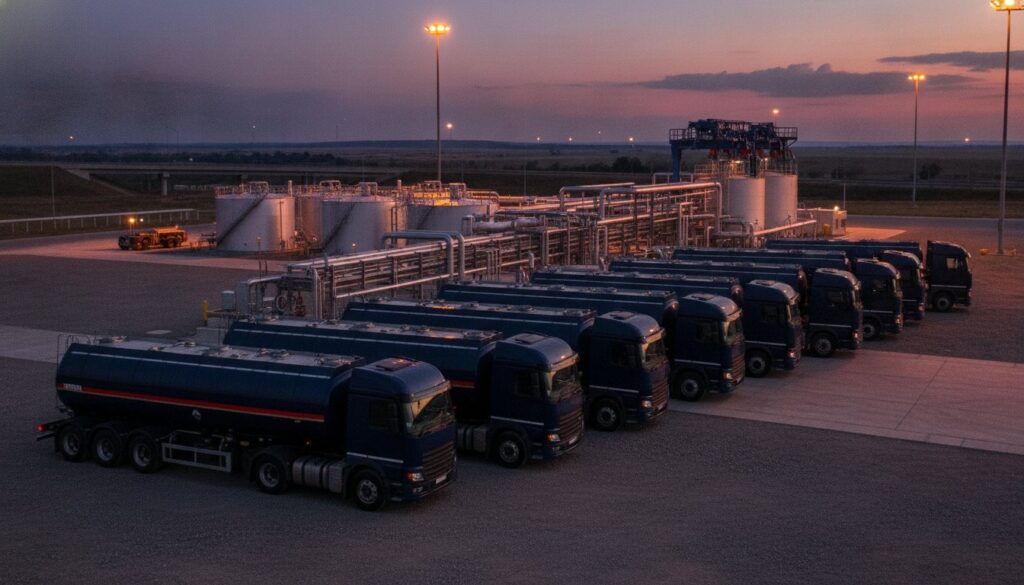
Bitumen procurement is a high-stakes logistical challenge disguised as a simple commodity purchase. In the demanding landscape of South African infrastructure, the gap between a successful road project and a costly failure often rests on the precision of your supply chain. You understand that securing bulk bitumen suppliers South Africa can trust involves more than just comparing price points per metric tonne. It requires a partner capable of maintaining material integrity at high temperatures whilst navigating the complexities of nationwide distribution.
We recognise the frustration of supply chain disruptions that stall construction and inconsistent material quality that compromises pavement longevity. This guide provides an authoritative framework for evaluating distribution partners to ensure your projects remain on schedule and compliant with SANS 4001-BT3 and BT4 standards. We’ll explore the critical logistical requirements for heated bulk transport and how to secure a strategic partner that manages risk with industrial confidence. By the end, you’ll possess the insights needed to maintain operational momentum across every project phase.
Key Takeaways
- Grasp the essential role of bitumen in national infrastructure and why bulk procurement is the catalyst for large-scale industrial development.
- Master the technical nuances of penetration grading and temperature susceptibility to select the correct material for local environmental conditions.
- Determine how to select bulk bitumen suppliers South Africa relies on for precise, high-temperature logistical execution across the country.
- Apply a strategic checklist to audit potential partners on their operational standards and stringent HSE compliance.
- Discover how integrating bitumen supply with broader fuel security provides a holistic solution for industrial stability and growth.
Understanding the Role of Bulk Bitumen Suppliers in South Africa
Bitumen serves as the fundamental binder for the asphalt that paves our nation’s progress. Bitumen is the viscous, black, and highly adhesive petroleum-based material essential for asphalt production. It’s the literal glue of civil engineering. Without it, the vast networks connecting our economic hubs would crumble. Identifying reliable bulk bitumen suppliers South Africa trusts is not merely a purchasing task; it is a critical strategic decision that dictates the viability of multi-million rand projects. This choice determines whether a project meets its deadline or falls victim to the cascading costs of logistical failure.
The integrity of a road surface is directly proportional to the quality of the bitumen used. High-grade materials resist rutting and cracking under the intense South African sun and heavy axle loads. When you secure a strategic supply partner, you aren’t just buying a product. You’re investing in the longevity of the infrastructure. A simple vendor might provide the material, but a partner ensures that the chemical properties and penetration grades align perfectly with the engineering specifications of the project. This distinction between a mere supplier and a “steadfast guardian” of the supply chain is what separates market leaders from their competitors.
The Economic Impact of Reliable Bitumen Sourcing
Infrastructure projects operate on thin margins and strict timelines. Any disruption in the supply chain ripples through the entire project, leading to idle machinery and escalating labour costs. Consistent bitumen sourcing acts as a buffer against these fiscal risks. By supporting the national transport and logistics sector, reliable supply ensures that goods continue to flow across the country without the hindrance of deteriorating road networks or delayed construction phases. It’s an essential component of national economic stability.
Bulk vs. Drummed Supply: Determining Your Requirements
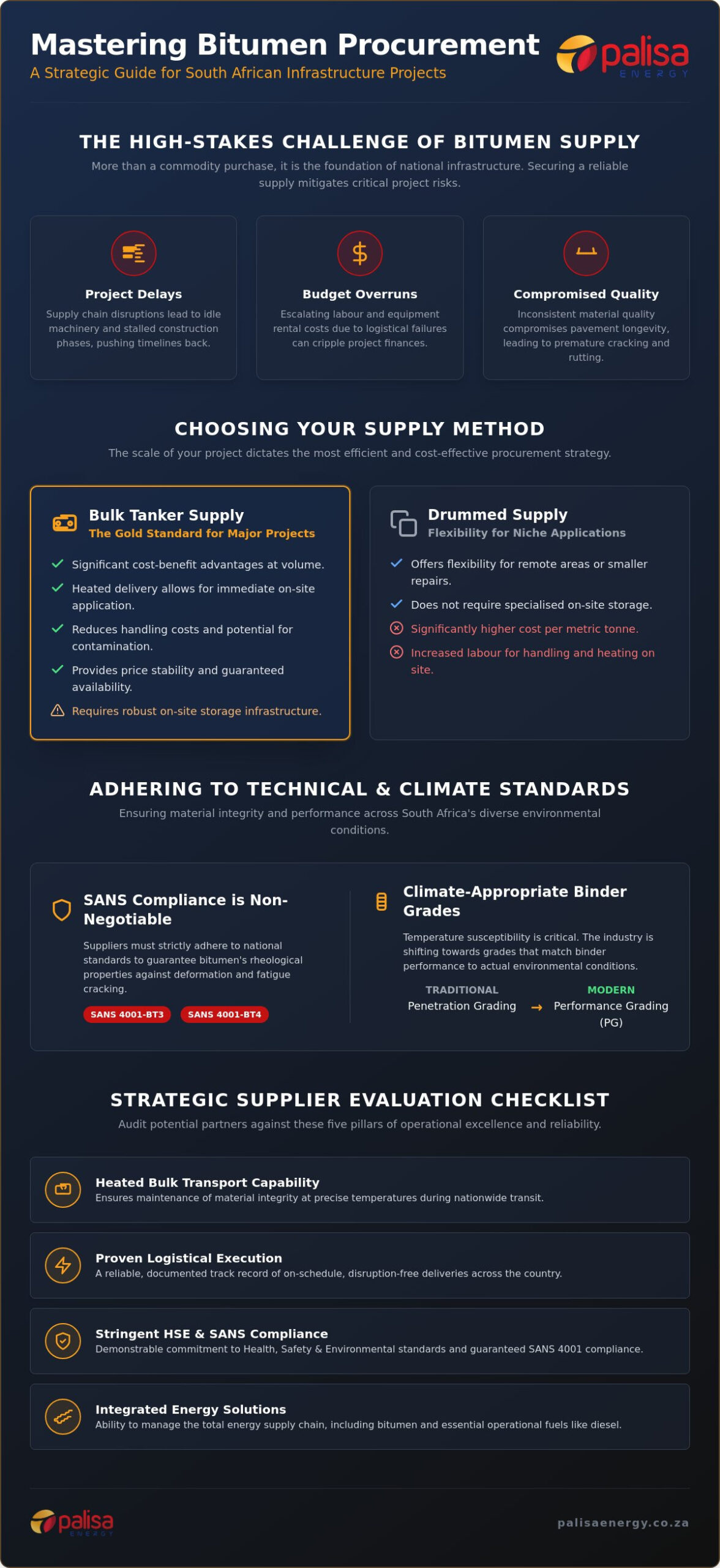
Deciding between bulk and drummed supply is a pivot point in procurement strategy. Bulk tankers transport heated bitumen directly to the site, allowing for immediate application and reduced handling costs. Whilst drummed bitumen offers flexibility for remote areas or smaller repairs, bulk procurement is the gold standard for large-scale developments. It necessitates robust on-site storage infrastructure but offers significant cost-benefit advantages over the long term. Volume-driven contracts with bulk bitumen suppliers South Africa relies on provide price stability and guaranteed availability, which are vital for multi-year infrastructure cycles.
In the current market, bitumen sourcing cannot be viewed in isolation. It’s a component of a broader energy strategy. Integrating bitumen procurement with comprehensive fuel logistics ensures that a project’s total energy requirements are met with precision. This holistic approach mitigates the risk of fragmented supply lines, where a lack of diesel might stall the very machines waiting for the bitumen delivery. True operational excellence requires a partner who understands this synergy and manages the complexity of the entire energy supply chain.
Technical Standards and Performance Grades for the South African Climate
South Africa’s diverse topography demands material that can withstand both the blistering heat of the Northern Cape and the humid coastal conditions of KwaZulu-Natal. Selecting the correct binder grade is a technical necessity that directly influences the structural integrity of the road network. The most proficient bulk bitumen suppliers South Africa operates with must adhere strictly to South African National Standards, specifically SANS 4001-BT3 and SANS 4001-BT4. These standards ensure that the bitumen possesses the rheological properties required to resist permanent deformation and fatigue cracking. Adherence to Southern African Bitumen Association (Sabita) guidelines provides an additional layer of technical assurance for executive stakeholders overseeing large-scale civil works.
Temperature susceptibility remains the most critical factor for local road performance. In our climate, bitumen must remain flexible enough to resist low-temperature cracking whilst being stiff enough to prevent rutting during peak summer temperatures. Whilst the industry has traditionally relied on the penetration grading system, there is a progressive transition toward Performance Grade (PG) bitumen. This shift allows engineers to select binders based on the actual environmental conditions of the project site rather than empirical laboratory tests. Consulting with a specialist for infrastructure planning ensures your material selection aligns with these modern specifications and long-term durability goals.
Penetration Grades: 60/70 vs. 80/100
The two most prevalent grades in the region serve distinct operational purposes. Bitumen 60/70 is a harder grade, favoured for national highways and heavy-traffic urban centres where resistance to high-temperature deformation is paramount. Conversely, Bitumen 80/100 is a softer variant, typically utilised in cooler regions or for lighter traffic loads where greater flexibility is required. Matching the hardness of the bitumen to the specific climatic zone is essential to prevent premature pavement failure.
Modified Bitumens and Emulsions
For high-stress environments, such as steep gradients or heavy-duty intersections, Polymer Modified Bitumen (PMB) offers enhanced durability and elastic recovery. These modified binders extend the service life of the pavement by providing superior resistance to oxidative ageing. In contrast, bitumen emulsions are utilised for cold-mix applications and maintenance projects, offering a safer and more energy-efficient alternative for chip seals and prime coats. The choice between these advanced materials requires deep supplier expertise to ensure the chemical composition meets the unique demands of the South African landscape.
The Critical Importance of Nationwide Fuel Distribution in South Africa
Bitumen delivery is a precision-dependent race against time and temperature. Whilst many vendors can supply the material, only the most sophisticated bulk bitumen suppliers South Africa relies on can command the logistical network required for nationwide execution. Transporting bitumen is not a standard freight operation. It is a specialised task involving the movement of a hazardous, high-temperature substance over vast distances. The logistical complexity increases exponentially when projects are located far from major refinery hubs, necessitating a partner that understands the nuances of the local landscape and the volatility of transport costs.
Operational excellence in this sector is underpinned by robust fuel logistics South Africa wide. Strategic distribution ensures that remote industrial sites receive the same level of service and material integrity as urban developments. This parity of service is vital for national infrastructure projects that span multiple provinces. A reliable distribution framework manages the risks associated with route complexity and varying road conditions, ensuring that the supply chain remains resilient even in the face of external disruptions.
Managing the Heated Supply Chain
Maintaining bitumen in its liquid state during transit requires specialised fleet equipment and meticulous temperature control. Bitumen must typically be kept between 140°C and 160°C to remain pumpable. If the temperature drops, the material begins to solidify, leading to costly delays and potential damage to offloading equipment. Conversely, overheating can cause thermal degradation, compromising the chemical properties of the binder. Real-time monitoring and insulated tanker technology are non-negotiable requirements. These standards align with the best practices promoted by the Southern African Bitumen Association (Sabita), ensuring that every litre delivered meets the rigorous technical specifications required for asphalt production.
Overcoming Geographical Hurdles in Distribution
South Africa’s geography presents significant hurdles for heavy-duty transport. Reaching remote mining operations or rural road construction sites requires a diverse and well-maintained tanker fleet capable of navigating varied terrains. Effective nationwide fuel distribution South Africa mitigates the risk of regional shortages by orchestrating supply from multiple depots. This strategic positioning is especially critical given the sensitivity of logistical costs to fuel price fluctuations. For instance, the July 2026 fuel price adjustment, which saw diesel 0.005% sulphur decrease by 358.80 c/l, illustrates how dynamic the cost environment remains. A partner that manages these variables with precision acts as a steadfast guardian of your project’s budget and timeline. Construction operations also depend on a continuous supply of diesel to power heavy machinery on site, making bulk diesel delivery South Africa wide an equally critical component of any large-scale infrastructure project.
Evaluating Bulk Bitumen Suppliers: A Strategic Checklist
Selecting from the available bulk bitumen suppliers South Africa offers requires a departure from traditional price-centric procurement. High-stakes infrastructure projects demand an audit framework that prioritises operational integrity and risk mitigation. You must look beyond the product grade and examine the supplier’s ability to maintain a consistent presence in the market. A partner’s historical performance and their alliances with major oil companies serve as the most reliable indicators of future supply security. This strategic assessment ensures that your project is backed by a partner who acts as a visionary enabler of your construction goals.
A comprehensive evaluation should weigh the supplier’s technical expertise against their logistical reach. As discussed in previous sections, the complexity of maintaining heated supply lines means that a vendor’s internal assets are just as important as the bitumen itself. You are looking for a steadfast guardian of your project timeline. This means auditing their fleet maintenance schedules, their driver training programmes, and their ability to scale operations during peak construction seasons. A truly strategic partner provides more than a commodity; they provide the stability required for long-term industrial growth.
Compliance and Safety Standards
Health, safety, and environmental (HSE) compliance is the non-negotiable foundation of this sector. Because bitumen is transported at extreme temperatures, any lapse in protocol can result in catastrophic environmental or physical damage. It’s imperative to verify that your partner adheres to national safety protocols for hazardous material transport. Regular audits of the fuel supply chain South Africa wide are essential to maintaining these standards. Ensure your supplier carries comprehensive insurance and has established environmental risk management plans to protect your project from third-party liabilities and regulatory penalties.
Operational Excellence and Support
Operational excellence is defined by the support provided after the contract is signed. Industrial operations don’t stop at sunset. Therefore, 24/7 customer support is a vital requirement for managing unforeseen logistical shifts or sudden project changes. Transparency in pricing and detailed delivery reporting allow for precise budgetary control and project tracking. Look for value-added services such as on-site storage scaling and infrastructure planning. A supplier that helps you design and optimise your storage facilities is a supplier invested in your long-term success. To secure your project’s future and ensure material continuity, consult with a strategic energy reseller that manages these complexities with industrial precision.
Partnering with Palisa Energy for Industrial Bitumen Solutions
Palisa Energy stands as a formidable independent reseller, bridging the gap between global energy production and local industrial demand. In a market where project success is measured by the precision of the supply chain, we offer a level of professional authority that transcends simple vendor relationships. We don’t just supply material. We command the logistical requirements necessary to fuel national progress. For organisations seeking bulk bitumen suppliers South Africa can trust, we provide a strategic partnership grounded in reliability and forward momentum.
True operational resilience requires looking beyond the immediate delivery. By integrating bitumen supply with a broader strategy for fuel security for business South Africa wide, we ensure that your entire project infrastructure is insulated against market volatility. This holistic approach manages the risks associated with multi-commodity procurement, allowing your team to focus on execution whilst we safeguard the continuity of your energy and binder requirements. We take pride in our role as a visionary enabler, managing complex logistics so our clients can achieve sustainable growth and maintain unwavering support for their stakeholders.
Comprehensive Logistics and Distribution
Our operational excellence is built upon high-level partnerships with leading oil companies. These alliances allow us to leverage a robust supply network, ensuring that we deliver on our promises even during periods of high demand. We act as a steadfast guardian of your supply chain, providing real-time monitoring of every load to maintain material integrity. Professional coordination is the hallmark of our service. We ensure that every tanker arriving at your site meets the stringent temperature and safety requirements discussed throughout this guide, providing a seamless transition from refinery to project site without the friction of logistical delays.
Infrastructure and Strategic Growth
Beyond delivery, we provide the technical expertise required to scale your operational capacity. Our team offers turnkey support for fuel depot design and compliance auditing, ensuring that your on-site storage meets all regulatory and safety standards. This proactive guidance helps businesses manage their internal logistics with the same precision we apply to our distribution network. Whether you are expanding a provincial road network or managing a large-scale industrial site, our infrastructure planning services provide the foundation for long-term success. We invite you to contact Palisa Energy today for a strategic consultation to discuss your bespoke procurement and logistics requirements.
Driving Progress through Strategic Procurement
The successful execution of large-scale civil engineering projects depends on the synergy between technical precision and logistical mastery. We’ve explored how identifying the right bulk bitumen suppliers South Africa offers requires a rigorous audit of technical standards, safety protocols, and nationwide distribution capabilities. Selecting a binder grade is only the first step; maintaining that material’s integrity across thousands of kilometres of diverse terrain is where true operational excellence is proven.
By prioritising a partner that integrates bitumen supply with comprehensive infrastructure planning and 24/7 industrial support, you insulate your project against the risks of supply chain volatility. This holistic approach ensures that your organisation remains a leader in the development of the national transport network. We invite you to take the next step in your procurement journey by aligning with a partner committed to your long-term growth and environmental responsibility.
Secure your industrial supply with Palisa Energy’s strategic bitumen solutions and leverage our nationwide logistical reach to maintain your project’s momentum. We look forward to supporting your vision for a more connected and resilient South Africa.
Frequently Asked Questions
What are the primary bitumen grades available from bulk suppliers in South Africa?
Bitumen 60/70 and 80/100 are the most prevalent penetration grades provided by bulk bitumen suppliers South Africa wide. Bitumen 60/70 is a harder grade ideally suited for heavy-traffic national highways, whilst 80/100 offers greater flexibility for cooler regions or lighter traffic loads. Suppliers also provide Polymer Modified Bitumen (PMB) for high-stress applications and various emulsions for cold-mix maintenance and prime coats.
How is bulk bitumen transported to ensure it remains at the correct temperature?
Bulk bitumen is transported in specialised, heavily insulated tankers equipped with internal heating systems to maintain the material between 140°C and 160°C. This precise temperature control ensures the bitumen remains in a liquid, pumpable state for immediate discharge upon arrival. Professional logistics providers utilise real-time monitoring technology to prevent thermal degradation and guarantee that the material integrity is preserved throughout transit.
Can bulk bitumen suppliers assist with on-site storage infrastructure planning?
Leading suppliers offer turnkey support for infrastructure planning, including fuel depot design and on-site storage scaling. This assistance ensures that your storage facilities are compliant with national safety regulations and optimised for efficient offloading. Expert guidance in this area is vital for industrial operations looking to manage large volumes of material whilst maintaining strict environmental and safety standards on-site.
What is the typical lead time for nationwide bitumen distribution?
Lead times are generally determined by the complexity of the delivery route and the current production schedules at major refineries. Nationwide distribution requires careful coordination to ensure that tankers are available and that the heated supply chain is maintained without interruption. Strategic partners provide detailed delivery reporting and structured timelines to ensure that your project remains on schedule despite geographical hurdles.
How does the price of bulk bitumen fluctuate in the South African market?
Bitumen pricing is primarily influenced by international crude oil prices, the Rand/US Dollar exchange rate, and local port and freight levies. As a petroleum-based product, its cost often follows the broader trends seen in the fuel market, including monthly adjustments. Because South Africa imports a portion of its bitumen, global refinery rates and shipping costs are significant factors in local price volatility.
Is Performance Grade (PG) bitumen becoming the standard for national roads?
Performance Grade (PG) bitumen is increasingly being specified for national road projects to address the varied climatic conditions across the country. Unlike traditional penetration grading, PG bitumen is selected based on the specific environmental temperatures and traffic loads of the project site. This transition represents a shift toward more durable infrastructure, as PG binders are engineered to resist rutting and cracking more effectively.
What safety certifications should I require from a bitumen distribution partner?
You must ensure your distribution partner complies with SANS 4001-BT3 and BT4 technical standards for bitumen quality. Furthermore, a reliable partner should possess comprehensive Health, Safety, and Environmental (HSE) certifications specifically for hazardous material transport. It’s essential to verify that they conduct regular safety audits and maintain robust insurance coverage to mitigate risks associated with high-temperature material handling.
How do I transition from drummed bitumen to bulk supply for my project?
Transitioning to bulk supply requires the installation of dedicated on-site storage tanks equipped with heating elements to keep the material liquid. Bulk bitumen suppliers South Africa relies on can conduct a cost-benefit analysis to determine if your project volume justifies the infrastructure investment. Moving to bulk supply significantly reduces per-tonne costs, eliminates drum disposal issues, and streamlines the application process for large-scale construction.