

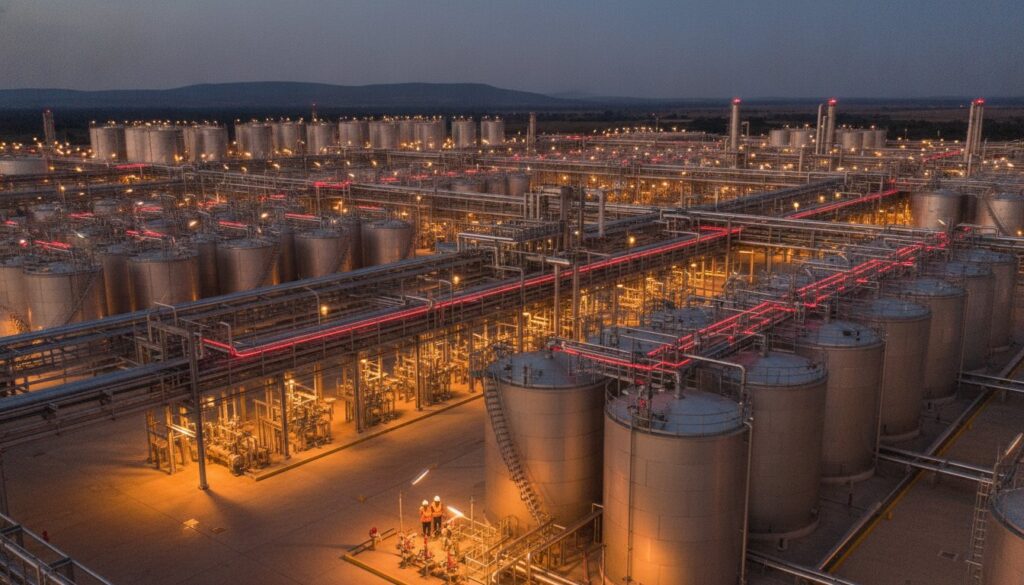
Could your current storage capacity withstand a three-week supply chain collapse whilst simultaneously meeting the rigorous new safety management standards? In an era where South Africa remains a net importer of liquid fuels, relying on just-in-time deliveries is no longer a viable strategy for industrial growth. Securing professional fuel infrastructure consulting South Africa is the only way to transform a vulnerable depot into a strategic asset that balances high-capacity reserves with absolute regulatory precision.
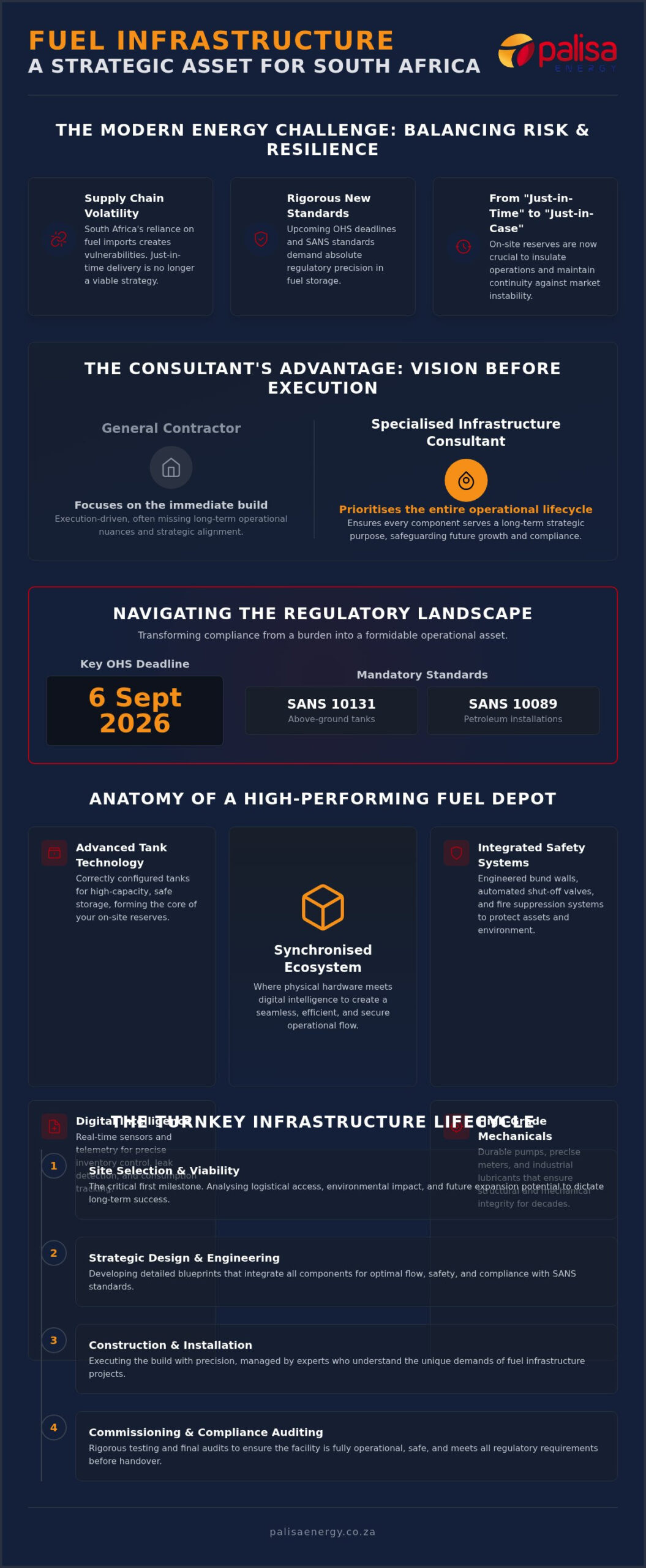
We understand that navigating the intersection of volatile global prices and the upcoming 6 September 2026 OHS regulatory deadline feels like a constant battle against operational risk. You deserve a partner who views infrastructure through the lens of a supplier, ensuring your facility isn’t just a tank but a resilient energy hub. This guide provides a comprehensive roadmap for achieving a turnkey storage solution that guarantees compliance with SANS 10131 and 10089 standards. We’ll explore the technical nuances of depot design, the critical nature of compliance auditing, and how on-site reserves act as a bulwark against market instability.
Key Takeaways
- Understand the strategic necessity of on-site storage to insulate your operations against increasing supply chain volatility in the South African energy sector.
- Discover how professional fuel infrastructure consulting South Africa integrates advanced hardware with digital monitoring to optimise depot efficiency and security.
- Learn to navigate the rigorous landscape of SANS standards and OHS regulations to transform compliance into a formidable operational asset.
- Identify the critical milestones in the infrastructure lifecycle, focusing on why site selection dictates the long-term viability of your fuel reserves.
- Explore the operational synergy achieved by aligning infrastructure design with a reliable diesel supply partner to ensure a seamless, turnkey energy solution.
The Strategic Importance of Fuel Infrastructure Consulting in South Africa
Fuel infrastructure consulting South Africa represents the strategic alignment of physical storage, stringent safety protocols, and complex logistics to ensure industrial continuity. It is more than a construction exercise; it’s a fundamental re-evaluation of how energy moves through a business. Given the current state of Energy in South Africa, where liquid fuel demand frequently outstrips local refinery production, businesses cannot afford to treat their fuel depots as an afterthought. This consulting discipline ensures that every component of a fuel system is synchronised to meet both current operational needs and future scale.
Poorly designed infrastructure creates bottlenecks that throttle industrial throughput. If a depot cannot facilitate rapid intake and discharge, the resulting delays translate directly into operational losses. High-performing facilities are built on the principle of “Fuel Security for Business,” where the infrastructure serves as a resilient pillar that supports, rather than hinders, the company’s growth trajectory. By optimising the flow of fuel, companies can reduce waste and ensure that their machinery remains powered without interruption. This requires a shift in perspective, viewing storage not as a cost centre, but as a strategic asset.
Mitigating Supply Chain Risks through On-Site Storage
The South African market has witnessed a decisive shift from “just-in-time” to “just-in-case” procurement strategies. This transition is driven by the urgent need to insulate operations from national fuel shortages and volatile supply chains. Professional planning prevents the catastrophic downtime that occurs when external networks falter, allowing businesses to maintain their own strategic reserves. Robust on-site infrastructure is the essential bridge to a reliable fuel supplier South Africa. It enables large-scale bulk deliveries that capitalise on wholesale price windows, effectively turning storage capacity into a financial hedge against price hikes and logistical delays.
The Role of the Infrastructure Consultant
A specialised consultant provides a level of foresight that a general contractor often lacks. Whilst a contractor focuses on the immediate build, a consultant prioritises the entire operational lifecycle. This “vision followed by execution” approach ensures that every valve, sensor, and bund wall serves a long-term strategic purpose. Executive stakeholders must recognise that in 2026, fuel infrastructure consulting South Africa is no longer a luxury reserved for the mining or manufacturing sectors. It’s a mandatory investment for any entity seeking to protect its margins against global energy instability. A consultant acts as a steadfast guardian, managing the technical complexities so that leadership can focus on core business objectives with total industrial confidence.
Core Components of Modern Fuel Storage Infrastructure
A high-performing fuel depot is a sophisticated ecosystem where physical hardware meets digital intelligence. In a market that demands absolute reliability, fuel infrastructure consulting South Africa focuses on synchronising these elements to create a seamless operational flow. According to South Africa’s Key Energy Statistics, the nation stands as the largest petroleum consumer in sub-Saharan Africa, a reality that places immense pressure on industrial storage systems. To meet this demand, infrastructure must be designed for both high-volume throughput and meticulous inventory control.
The integration of real-time monitoring with physical hardware is no longer optional. Modern sensors and telemetry systems provide a constant stream of data, allowing managers to detect leaks, monitor temperature fluctuations, and track consumption patterns with surgical precision. This digital oversight ensures that every litre is accounted for, transforming the storage facility from a passive container into an active data hub. Beyond the fuel itself, the longevity of the entire system depends on the use of high-grade industrial lubricants. These specialised fluids protect the moving parts of pumps and meters from premature wear, ensuring that the infrastructure maintains its structural and mechanical integrity over decades of service.
Tank Technology and Storage Solutions
Selecting the correct tank configuration is a pivotal decision that balances site constraints with long-term maintenance requirements. Whilst underground storage tanks (USTs) offer space-saving benefits and inherent fire protection, above-ground storage tanks (ASTs) are often preferred for their ease of inspection and lower installation costs. Self-bunded tanks have become the industrial standard for rapid deployment. These double-walled units provide secondary containment, eliminating the need for complex concrete bund walls whilst ensuring total compliance with environmental safety standards. Material selection remains critical; choosing corrosion-resistant alloys or advanced coatings is essential for preventing soil contamination and preserving the purity of the stored product.
Pumping Systems and Automated Dispensing
The speed at which fuel moves from storage to the vehicle determines the efficiency of the entire industrial operation. High-flow pumping systems are engineered to reduce turnaround times, ensuring that heavy machinery and transport fleets spend less time idling and more time in production. These systems must be integrated with automated Fuel Management Systems (FMS) to prevent shrinkage and unauthorised dispensing. By connecting these pumps to the wider fuel logistics South Africa network, businesses can automate reordering processes and maintain optimal stock levels. If you’re planning to scale your storage capacity, partnering with a diesel supply specialist ensures that your dispensing hardware is perfectly matched to your consumption profile.
Different fuel types also dictate specific hardware choices. Diesel requires robust filtration to manage moisture, whilst petrol necessitates sophisticated vapour recovery systems to manage volatility. Jet fuel storage is even more demanding, requiring stainless steel contact points and specialised epoxy linings to prevent any risk of particulate contamination.
Navigating Compliance: Fuel Auditing and Environmental Standards
Compliance in the energy sector is often viewed as a bureaucratic hurdle, yet it’s the bedrock of operational resilience. In a shifting landscape influenced by South Africa’s energy sector reforms, regulatory adherence ensures that your facility remains legally and financially viable. Professional fuel infrastructure consulting South Africa transforms these complex requirements into a structured roadmap for safety and efficiency. By adopting a “compliance as an asset” mindset, executive stakeholders can prevent the catastrophic financial losses associated with environmental contamination, fires, or regulatory shutdowns. This proactive stance is particularly critical as the OHS Amendment Bill and new Physical Agents Regulations come into full effect by September 2026, introducing stricter safety management system requirements and administrative fines.
Regular auditing is the mechanism that maintains this standard over the facility’s lifecycle. It isn’t merely about ticking boxes; it’s about ensuring that every valve, bund wall, and sensor operates within its designed parameters. These audits are also essential for maintaining insurance validity. Insurers increasingly scrutinise maintenance records and compliance certificates before honouring claims related to fuel losses or site accidents. Without a documented history of professional auditing, a business risks total exposure during a crisis.
Adhering to SANS 10131 and Local Regulations
South African National Standards provide the technical blueprint for safe energy storage. SANS 10131 governs the storage and handling of liquid fuel in above-ground installations, specifically focusing on capacities below 200m³. Designing a depot according to these standards involves rigorous hazardous zone classification and the integration of sophisticated fire safety systems. These systems must include appropriate foam induction capabilities and emergency shut-off valves that trigger automatically during a thermal event. SANS 10131 compliance is the non-negotiable baseline for legal fuel operations in South Africa.
Environmental Stewardship and Spill Prevention
Protecting the local ecosystem is both a moral obligation and a legal necessity under the National Environmental Management Act (NEMA). Modern fuel infrastructure planning South Africa incorporates secondary containment solutions, such as reinforced concrete bunding and oil-water separators, to trap potential spills before they reach the water table. High-precision leak detection systems provide an early warning mechanism, alerting operators to microscopic integrity failures that could otherwise lead to long-term soil degradation. Sustainable design choices, whilst requiring an initial investment, lower the total cost of ownership by reducing the likelihood of expensive environmental remediation projects and ensuring the facility’s longevity in an increasingly green-conscious regulatory environment.
The Lifecycle of Fuel Infrastructure Planning: From Site Selection to Construction
Developing a fuel facility is a high-stakes industrial undertaking that requires a methodical, multi-phase approach. Success isn’t measured solely by the completion of construction but by the long-term operational harmony and safety of the site. Professional fuel infrastructure consulting South Africa orchestrates this complex progression, ensuring that every technical decision aligns with the client’s broader commercial objectives. This lifecycle begins with a vision of energy security and moves through rigorous engineering phases to reach a state of total operational readiness.
Managing the transition from a construction site to an active fuel procurement hub requires precise timing. As the physical assets are finalised, the focus must shift to the logistical integration of bulk supply. This ensures that the moment the tanks are commissioned, the business can immediately begin building its strategic reserves. Fragmented planning often leads to facilities that sit empty whilst supply contracts are negotiated; a synchronised approach avoids this costly stagnation.
Strategic Site Selection and Feasibility
Site selection is the most critical decision in the planning phase. It dictates everything from geotechnical stability to the logistical accessibility for heavy bulk tankers. Consultants must analyse soil composition and drainage whilst assessing the proximity to environmentally sensitive areas or residential zones to ensure long-term regulatory compliance. This phase also involves determining the optimal storage capacity by projecting consumption patterns and growth targets for the next decade. A poorly conceived layout doesn’t just hinder operational flow; it creates inherent safety risks that are difficult and expensive to rectify once the concrete is poured.
Turnkey Construction and Project Management
Fragmented service providers often lead to communication gaps, conflicting technical standards, and significant project overruns. Choosing fuel depot turnkey solutions South Africa ensures that a single entity manages the entire lifecycle, from the initial feasibility study to the final commissioning. This centralised project management solidifies quality control during the installation of specialised petroleum equipment, such as high-flow pumps and automated metering systems. Turnkey solutions provide a single point of accountability from initial design to the first fuel drop. This model allows executive stakeholders to maintain their focus on core business operations whilst their energy infrastructure is delivered to exact industrial standards. If you’re ready to secure your energy future with a bespoke storage facility, contact our team for a comprehensive infrastructure assessment to begin your project with total confidence.
Operational Synergy: Integrating Infrastructure with Palisa Energy
Palisa Energy occupies a unique position in the market by bridging the gap between technical engineering and bulk fuel procurement. Unlike generic consulting firms, our expertise is forged in the reality of being a major reseller of petroleum products. This dual perspective ensures that our fuel infrastructure consulting South Africa isn’t just theoretically sound but logistically superior. We design depots through the eyes of both the driver delivering the fuel and the manager monitoring the margins, ensuring every litre is moved with maximum efficiency. By integrating supply-side intelligence with infrastructure design, we eliminate the friction points that often plague fragmented projects.
A 24/7 support model is central to our role as a strategic partner. We understand that industrial operations don’t pause for weekends or public holidays, so our support extends across both facility maintenance and fuel delivery. This holistic approach ensures that your infrastructure remains in peak condition whilst your tanks remain full. We encourage businesses to view their physical assets as the foundation of a long-term fuel security strategy. This perspective transforms storage from a static cost into a dynamic shield against market volatility and supply chain disruptions.
Customised Solutions for Diverse Industrial Needs
Mining, manufacturing, and transport fleets each possess distinct operational rhythms that require bespoke infrastructure. A mining site requires high-volume throughput in rugged environments, whilst a manufacturing plant might prioritise precision metering and tight footprint integration. Palisa Energy tailors every design to these specific industrial profiles. Our strategic partnerships with leading oil companies guarantee that once your facility is commissioned, it’s supported by a reliable, high-grade diesel supply. We act as a steadfast guardian, managing the complex intersection of infrastructure maintenance and fuel logistics so your leadership can focus on scaling the business with total industrial confidence.
Commitment to Excellence and Sustainable Growth
Our brand is defined by professional authority and a deep commitment to environmental responsibility. We don’t just build depots; we enable sustainable growth by ensuring every facility meets the highest standards of safety and efficiency. The journey toward energy resilience begins with a clear understanding of your current capabilities. We invite stakeholders to initiate a comprehensive compliance and infrastructure audit to identify optimisations that drive long-term value. Contact Palisa Energy to organise your fuel infrastructure consultation and secure a partnership defined by reliability and forward momentum.
Securing Your Industrial Future through Strategic Infrastructure
Building a resilient energy foundation requires a shift from reactive procurement to proactive infrastructure management. By integrating rigorous SANS compliance with advanced storage technology, South African businesses can insulate themselves from supply chain volatility whilst ensuring total operational continuity. Professional fuel infrastructure consulting South Africa provides the technical foresight needed to transform a standard depot into a high-performance strategic asset. This process ensures that every component; from leak detection systems to automated dispensing; is synchronised for maximum efficiency and long-term reliability.
Palisa Energy stands as your steadfast guardian in this complex landscape, offering comprehensive turnkey support and 24/7 industrial customer support to manage your most critical logistics. Our strategic oil company partnerships ensure that your newly commissioned facility is backed by a dependable bulk supply. Partner with Palisa Energy for expert fuel infrastructure consulting to align your physical assets with your growth objectives. We look forward to empowering your operations with the stability and precision required for sustainable industrial success in 2026 and beyond.
Frequently Asked Questions
What is fuel infrastructure consulting and why does my business need it?
Fuel infrastructure consulting South Africa involves the expert integration of storage systems, safety protocols, and logistical workflows to ensure energy security. Your business needs this service to navigate complex regulations and insulate operations against supply chain volatility. A professional consultant acts as a steadfast guardian, identifying inefficiencies in your current layout and designing a facility that supports long-term industrial growth whilst maintaining total compliance with evolving national safety standards.
How much on-site fuel storage capacity should an industrial business maintain?
The ideal capacity typically covers 14 to 21 days of peak operational consumption to hedge against logistical disruptions. This calculation depends on your specific industrial throughput and the reliability of your external supply network. By maintaining significant on-site reserves, you transition from a vulnerable “just-in-time” model to a resilient “just-in-case” strategy. This buffer ensures that your machinery remains powered during national shortages, protecting your throughput and bottom line from external market shocks.
What are the primary SANS standards for fuel storage in South Africa?
The primary standards include SANS 10131 for above-ground storage below 200m³ and SANS 10089 for larger bulk installations and underground tanks. These regulations dictate everything from bund wall construction to hazardous zone classifications. Adhering to these standards is a non-negotiable legal requirement that ensures the safety of your personnel and the environment. Professional consulting ensures your facility meets these rigorous benchmarks, which is also essential for maintaining valid insurance coverage for your fuel assets.
Can Palisa Energy help with both the design and the construction of a fuel depot?
Yes, Palisa Energy provides comprehensive turnkey support that encompasses the entire lifecycle from initial design to construction management. We manage every technical detail, including site feasibility studies, equipment procurement, and final commissioning of the depot. By offering a single point of accountability, we eliminate the communication gaps often found with fragmented service providers. This ensures that your facility is built to exact industrial specifications whilst remaining synchronised with your bulk diesel supply requirements.
How long does a typical fuel infrastructure planning project take to complete?
A typical project lifecycle can range from three to nine months depending on the scale of the facility and the complexity of Environmental Impact Assessments (EIAs). The planning phase involves site selection and feasibility, whilst the construction phase focuses on the installation of specialised petroleum equipment. We prioritise a methodical approach to ensure every safety sensor and bund wall is correctly implemented. This intentional pace guarantees a facility that is both safe and operationally efficient for decades.
What is involved in a fuel compliance audit for an existing facility?
A compliance audit involves a rigorous physical inspection of your storage tanks, pumping systems, and secondary containment structures to ensure adherence to SANS and OHS regulations. We verify the integrity of leak detection systems and the functionality of emergency shut-off valves. These audits transform compliance into a strategic asset by identifying potential failure points before they lead to catastrophic accidents. Regular auditing is essential for maintaining your license to operate and ensuring insurance validity in 2026.
How does modern infrastructure improve fuel cost management?
Modern infrastructure facilitates bulk purchasing at wholesale prices and utilises automated Fuel Management Systems (FMS) to eliminate shrinkage and unauthorised dispensing. These digital systems provide real-time data on consumption patterns, allowing for more precise budgeting and inventory control. By reducing waste and optimising delivery schedules, high-performing depots significantly lower the total cost of ownership. This digital oversight ensures that every litre of fuel is accounted for and utilised efficiently within your industrial operations.
Is it possible to integrate renewable energy solutions with traditional fuel infrastructure?
It is entirely possible to design hybrid systems where traditional fuel reserves act as a reliable backup for renewable energy installations. In many industrial settings, solar-powered pumping systems are integrated with diesel storage to reduce operational costs and carbon footprints. This synergy allows businesses to pursue sustainable growth whilst maintaining the unwavering reliability of on-site fuel reserves. Our fuel infrastructure consulting South Africa helps you navigate this transition, ensuring that your energy infrastructure remains innovative yet grounded in traditional reliability.