

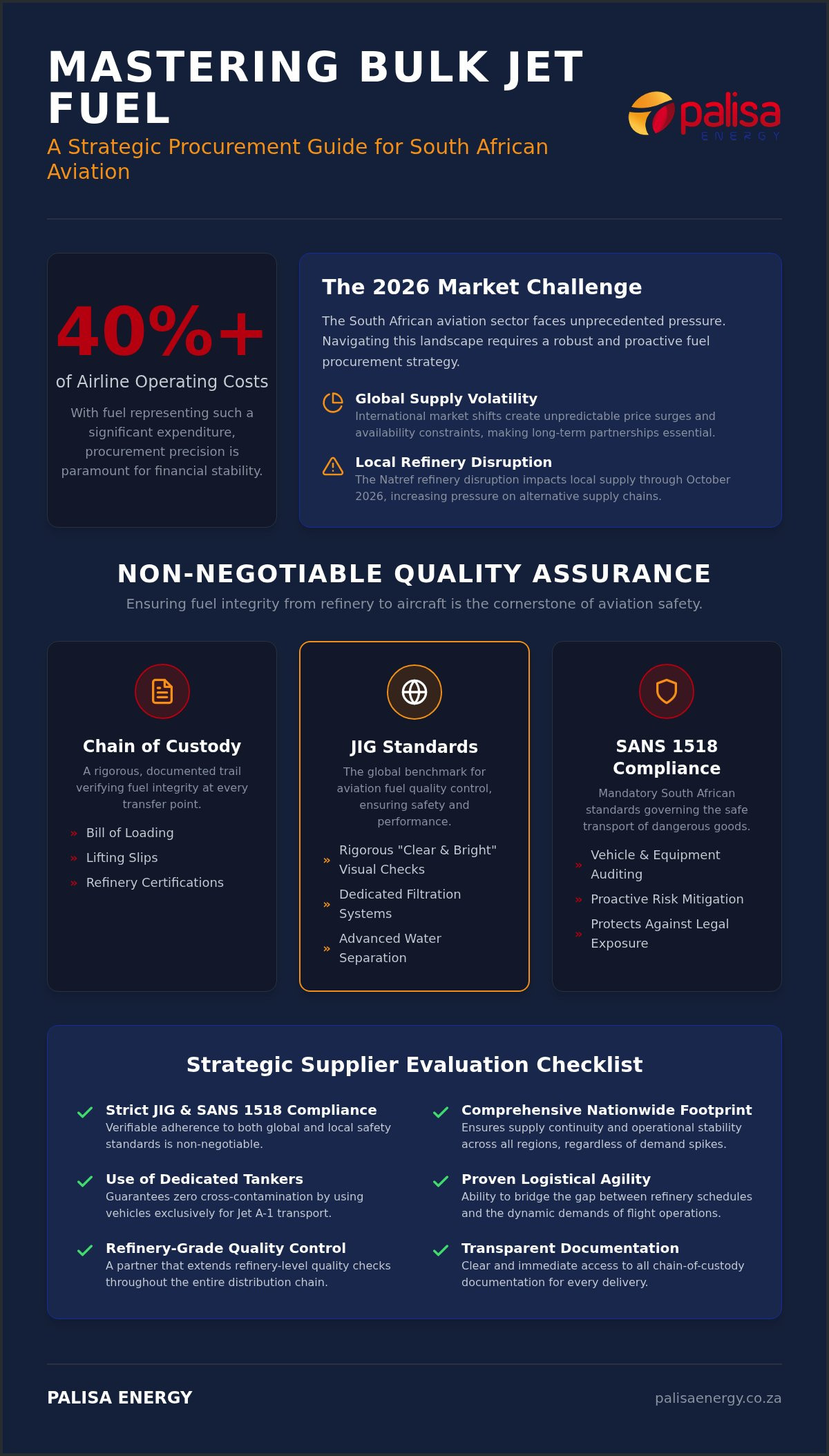
With fuel now accounting for over 40% of airline operating costs in Southern Africa, the margin for procurement error has effectively vanished. You understand that securing a reliable energy source is the pulse of your aviation business, yet the market volatility of 2026 makes this more challenging than ever before. Between global supply shifts and the Natref refinery disruption impacting availability through October 2026, the pressure to identify bulk jet fuel suppliers South Africa can rely upon has reached a critical peak for flight operators across the country.
We recognise that your primary concerns revolve around supply continuity and the catastrophic risks of fuel contamination. This guide will empower you to master the complexities of aviation fuel procurement and logistics, ensuring your fleet remains airborne despite ongoing supply chain turbulence. We examine how strategic partnerships, strict JIG compliance, and optimised procurement frameworks can transform your fuel management from a logistical vulnerability into a pillar of operational excellence. By aligning with a partner that values precision and safety, you can navigate these industrial challenges with absolute confidence.
Key Takeaways
- Understand the vital role independent resellers play in bridging the gap between national refineries and your daily flight operations.
- Learn how to evaluate bulk jet fuel suppliers South Africa through the lens of global JIG standards and local SANS 1518 compliance to eliminate contamination risks.
- Discover a strategic checklist for selecting a procurement partner that balances refinery-grade quality with the agility required for 2026 market conditions.
- Identify the logistical protocols necessary for nationwide distribution, including the use of dedicated tankers to maintain fuel integrity across diverse terrains.
- Master the procurement strategies needed to optimise your fuel spend whilst guaranteeing supply continuity for your entire aviation fleet.
The Landscape of Bulk Jet Fuel Supply in South Africa
Bulk jet fuel supply represents the wholesale procurement and meticulous logistical delivery of Jet A-1 or Avgas to commercial entities. It isn’t merely a transaction; it’s a high-stakes operational requirement. For many organisations, identifying the right bulk jet fuel suppliers South Africa offers is the first step in building a resilient aviation strategy. This sector serves as the circulatory system for national trade and transport, necessitating a supply chain that is both flexible and uncompromising on quality.
Independent resellers do more than move product; they manage the complex interface between refinery production schedules and the unpredictable demands of flight operations. By partnering with major oil companies, these resellers provide the agility that large-scale producers often lack. This role is vital within the framework established by the Fuels Industry Association of South Africa (FIASA), which ensures that standards remain uniform across the supply chain. When evaluating bulk jet fuel suppliers South Africa businesses must prioritise those who can bridge this gap with technical expertise and logistical speed.
Supply continuity is the absolute primary driver for aviation growth amongst South African enterprises. A single missed delivery doesn’t just delay a flight; it disrupts entire logistics networks and erodes client trust. Therefore, choosing a partner with a comprehensive nationwide footprint is essential. A robust distribution network provides the operational stability needed to scale your business, ensuring that fuel reaches your fleet regardless of regional demand spikes or localised infrastructure challenges.
The Strategic Importance of Jet A-1 Purity
Jet A-1 remains the global benchmark for turbine engines due to its specific energy density and thermal stability. Even minor particulates can lead to catastrophic engine wear or fuel system icing. Safety is non-negotiable. The ‘clean-dry’ standard dictates that aviation fuel must be visually clear, bright, and entirely free from undissolved water or particulate matter at every stage of the transfer process.
Market Dynamics and Supply Chain Resilience
Global energy shifts and local refinery constraints define the 2026 market. Volatility isn’t a temporary state; it’s the new baseline. Establishing long-term strategic partnerships is the only way to insulate your fleet from price surges and dry pumps. Securing fuel security for businesses in South Africa is no longer just a procurement task but a core risk management strategy that protects your operational integrity.
Technical Standards and Quality Assurance Protocols
Precision is the baseline for aviation energy. The “chain of custody” protocol acts as a non-negotiable safeguard, ensuring fuel integrity remains uncompromised between the refinery gate and the aircraft wing. This rigorous tracking system relies on meticulous documentation, specifically the Bill of Loading and Lifting slips. These documents serve as a definitive record for every litre of fuel, verifying its specific batch origin, refinery certification, and quality metrics at the point of transfer. For the most dependable bulk jet fuel suppliers South Africa currently hosts, these records aren’t just paperwork; they’re the primary evidence of a secure, contamination-free supply chain.
JIG Standards: The Global Safety Benchmark
The Joint Inspection Group (JIG) standards represent the apex of global aviation fuel quality control. Adhering to JIG protocols requires rigorous testing at every transfer point, including visual “clear and bright” checks and detailed chemical analysis. This process necessitates the use of dedicated filtration systems and advanced water separation technology to prevent microbial growth or particulate contamination that could lead to engine failure. Palisa Energy prioritises these international standards because industrial excellence isn’t negotiable. Maintaining this level of scrutiny ensures that the fuel powering your turbine engines meets the exact specifications required for safe, high-altitude performance.
SANS Compliance and Regulatory Safety
Locally, the South African National Standards, specifically SANS 1518, govern the design and operation of vehicles used for the transport of dangerous goods. Compliance with these regulations is mandatory, yet its true value lies in proactive risk mitigation. Regular auditing of storage facilities and transport equipment protects your business from legal exposure and catastrophic operational liabilities. If your organisation is managing on-site tanks, consulting a guide on strategic fuel infrastructure planning ensures your storage meets both SANS requirements and long-term operational needs.
Looking toward the horizon, the industry is also evaluating the potential for Sustainable Aviation Fuel (SAF) as a means to enhance energy security whilst meeting global environmental mandates. As these new formulations emerge, the same rigorous quality assurance protocols will apply to ensure seamless integration into existing turbine engines. To ensure your operations remain compliant with the latest 2026 standards, it’s wise to partner with a specialist reseller who understands these evolving technical landscapes and can guarantee the purity of every drop delivered.
Evaluating Bulk Jet Fuel Suppliers: A Strategic Framework
Selecting from the available bulk jet fuel suppliers South Africa offers requires a transition from transactional procurement to strategic partnership. In a high-stakes industry where a single logistical failure can ground an entire fleet, you must evaluate potential partners based on their ability to absorb market shocks. A robust evaluation framework for 2026 should prioritise four critical pillars: technical compliance, logistical redundancy, price transparency, and historical safety records. Reliability isn’t a static trait; it’s a measurable outcome of a supplier’s operational history and their commitment to maintaining the highest industrial standards.
The choice between direct refinery sourcing and agile independent resellers often defines your operational flexibility. Whilst refineries provide the massive volumes necessary for the national grid, independent resellers specialise in the “last mile” precision that commercial flight operations demand. These resellers act as a vital buffer, providing personalised service and rapid response times that major oil companies aren’t structured to deliver. Every aspect of this relationship must function within the boundaries of South African fuel industry legislation, ensuring that your procurement strategy remains fully compliant with the Petroleum Products Act and associated environmental regulations.
Real-time communication and 24/7 support are no longer optional extras; they are fundamental requirements for aviation logistics. You need a partner that provides immediate visibility into delivery schedules and potential supply disruptions. This level of transparency allows your team to make informed decisions before a delay becomes a crisis. A supplier’s safety record serves as the ultimate proof of their competence, reflecting their ability to manage hazardous materials without compromising your assets or your reputation.
Capacity and Logistical Scalability
Scalability is the true test of a fuel partner’s worth. Your supplier must demonstrate the capacity to scale deliveries during peak demand periods or reroute supplies during emergency refinery shutdowns. A nationwide distribution network is essential for reducing lead times and ensuring that fuel is available exactly where your flight plan dictates. Logistical reach is just as important as the fuel itself because a secure supply is worthless if it cannot be delivered to your specific location with absolute punctivity.
Value-Added Services and Technical Support
The most effective suppliers act as strategic enablers rather than passive vendors. This involvement includes on-site infrastructure consulting and storage planning to ensure your facilities are optimised for efficiency and safety. Expert procurement advice is also vital for managing large-scale energy budgets in a volatile market. Palisa Energy takes pride in this proactive role, offering the technical support and strategic insight necessary to transform fuel procurement from a complex challenge into a streamlined operational advantage.
Logistical Excellence in Nationwide Fuel Distribution
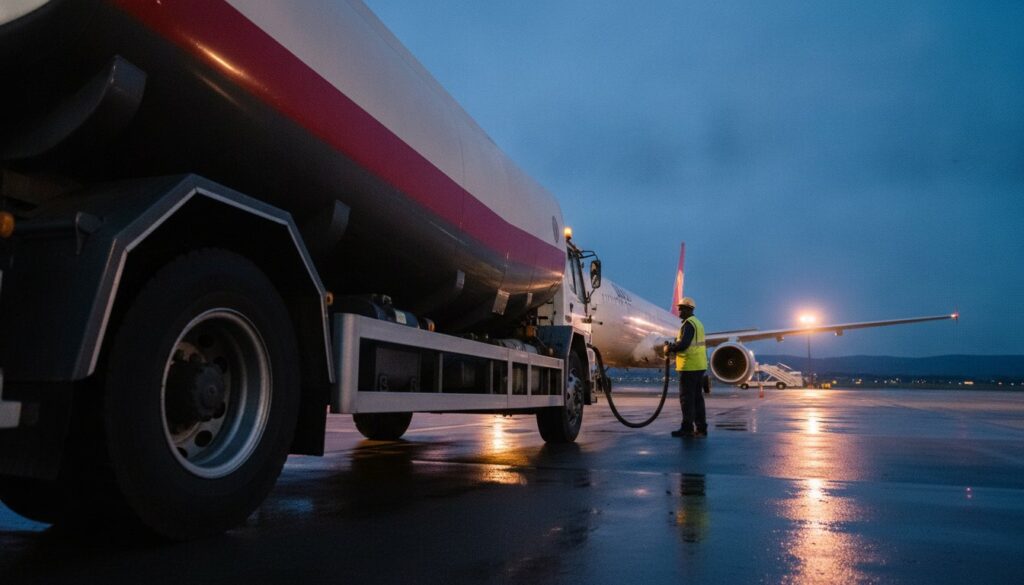
Coordinating bulk jet fuel deliveries across South Africa’s diverse terrains requires a sophisticated command of industrial geography. From high-altitude airfields to remote coastal depots, the logistical path must be clear, secure, and meticulously timed. Leading bulk jet fuel suppliers South Africa relies on utilize dedicated tankers designed exclusively for aviation spirit. This exclusivity is a critical safeguard against cross-contamination, ensuring that residues from other petroleum products never compromise the integrity of the Jet A-1 supply. Real-time monitoring and GPS tracking provide a layer of delivery security that is essential in 2026, allowing fleet managers to track high-value energy assets from the refinery to the point of discharge with absolute transparency.
Offloading protocols at industrial depots or private airfields are strictly defined to prevent environmental hazards and maintain product purity. Every connection, valve, and hose must be inspected before the transfer begins. These protocols ensure that the “clean-dry” standard is upheld throughout the final stage of the journey. By managing these complex logistics with precision, a strategic partner removes the burden of supply chain management from the client, allowing them to focus on core flight operations without the distraction of fuel-related delays.
Maintaining Purity During Transport
Transporting aviation fuel isn’t a standard haulage task. It requires specialised equipment, including epoxy-lined tanks and stainless steel fittings, to prevent corrosion and particulate shedding during transit. The “last mile” quality checks involve visual inspections and chemical tests performed immediately before the fuel enters client storage, providing a final barrier against contamination. This rigorous approach ensures that the fuel remains within specification from the moment it leaves the refinery until it’s pumped into your storage tanks. For a deeper understanding of these complex movements, consult our comprehensive guide to fuel logistics.
Mitigating Supply Chain Disruptions
Supply chain resilience is frequently tested by refinery maintenance schedules and logistical bottlenecks. For instance, the unplanned shutdown at the Natref refinery on 25 August 2026, which impacted fuel availability from early September through to October, highlights the inherent vulnerabilities of the national grid. To mitigate such risks, proactive partners implement strategic storage planning and maintain buffer stocks to ensure operational continuity. A dedicated distribution partner doesn’t just deliver fuel; they anticipate these bottlenecks and manage the logistics so you don’t face catastrophic operational downtime. To secure your supply chain against future disruptions, partner with Palisa Energy for a resilient, 24/7 industrial supply solution.
Securing Your Energy Future with Palisa Energy
Palisa Energy stands as a formidable corporate entity and a dedicated strategic partner within the South African energy sector. As one of the premier bulk jet fuel suppliers South Africa trusts, we bridge the gap between refinery production and the high-stakes requirements of aviation enterprises. Our role extends beyond simple distribution; we act as a steadfast guardian of your operational continuity, managing complex logistics with precision so you don’t have to. The synergy between our high-quality procurement processes and elite logistical execution creates a foundation of reliability that allows your business to pursue ambitious growth targets without energy-related constraints.
Our commitment to safety and integrity is reflected in every litre delivered. We understand that in the aviation sector, excellence isn’t an option; it’s a prerequisite for survival. By fostering long-term industrial partnerships, we provide the stability needed to navigate the inherent volatility of the 2026 energy market. We invite stakeholders to move beyond transactional buying and integrate their fuel procurement into a broader strategic energy plan that prioritises longevity and unwavering support. Reliability is our baseline, and your growth is our objective.
A Holistic Approach to Petroleum Products
Managing an industrial fleet requires more than just jet fuel. Palisa Energy simplifies these complex supply chains by serving as a single point of contact for a comprehensive range of petroleum products. Our portfolio includes high-volume distribution of paraffin and lubricants, alongside our specialised bulk diesel supply solutions. This integrated approach ensures that every vehicle and turbine in your operation is powered by a consistent, high-standard energy source, reducing administrative overhead and streamlining your procurement workflow.
The Path to Operational Excellence
Partnering with a South African-owned expert in energy logistics provides a distinct advantage in understanding local market conditions and regulatory nuances. Our 24/7 industrial support ensures that your operations never stall, regardless of the time or regional challenges. As you plan for the 2026 fiscal year, a forward-thinking approach to fuel procurement is essential for maintaining a competitive edge. We encourage you to visit the Palisa Energy homepage to begin a personal consultation and develop a procurement plan that secures your energy future. Operational excellence is a journey of precision, and we are here to guide every step.
Powering the Future of South African Aviation
Securing a resilient aviation fuel strategy requires a deep integration of technical standards and logistical foresight. We’ve examined how rigorous JIG compliance and the meticulous management of the fuel chain of custody act as the primary safeguards for your turbine assets. Identifying the most reliable bulk jet fuel suppliers South Africa currently hosts is a strategic decision that directly impacts your organisational resilience and long-term fiscal health.
By leveraging strategic partnerships with major oil companies and maintaining a robust nationwide distribution network, Palisa Energy delivers the 24/7 industrial and commercial support essential for modern flight operations. We manage the intricate details of fuel purity and supply continuity so your team doesn’t have to face the risks of contamination or stockouts. Secure your aviation fuel supply chain with Palisa Energy today to guarantee that your fleet maintains its momentum regardless of market shifts. Your journey toward total energy security starts with a partner committed to industrial excellence.
Frequently Asked Questions
What are the main criteria for choosing a bulk jet fuel supplier in South Africa?
The primary criteria for selecting bulk jet fuel suppliers South Africa trusts include JIG compliance, logistical redundancy, and a proven safety record. You should evaluate a partner’s ability to maintain supply during refinery shutdowns, such as the 2026 Natref disruption. Technical support and real-time GPS tracking are equally vital for operational transparency. A supplier’s commitment to safety ensures that your procurement strategy remains resilient against market volatility.
How is the quality of Jet A-1 fuel verified during a bulk delivery?
Quality is verified through a rigorous chain of custody protocol involving visual inspections and chemical analysis. Every delivery must be accompanied by a Bill of Loading and Lifting slips that confirm the fuel’s refinery origin. Before the fuel enters your storage, technicians perform “clear and bright” checks to ensure the absence of water or particulates. These multi-stage tests are essential for preventing engine failure and maintaining the highest flight safety standards.
What is the difference between Jet A-1 and Avgas 100LL in terms of supply?
Jet A-1 is a kerosene-type fuel used for turbine engines, whilst Avgas 100LL is a high-octane leaded fuel designed for piston-engine aircraft. The supply chain for Jet A-1 is significantly larger due to commercial airline demand. In contrast, Avgas distribution often involves smaller, specialised batches. Understanding these differences is critical for procurement, as the logistical requirements and storage protocols for each fuel type vary according to their chemical properties.
Are there specific SANS regulations for storing bulk jet fuel on-site?
Yes, on-site storage is governed by strict South African National Standards, primarily SANS 10131, which details the requirements for the storage and handling of liquid fuels. These regulations cover tank construction, bunding to prevent environmental leaks, and fire safety systems. Compliance with these standards is mandatory to avoid legal liabilities and ensure operational safety. Regular auditing by your supply partner helps maintain these high standards of infrastructure integrity.
How does Palisa Energy ensure fuel purity during nationwide transport?
Palisa Energy ensures fuel purity by utilising dedicated tankers specifically designed for aviation products to prevent cross-contamination. Our transport equipment features epoxy-lined tanks and stainless steel fittings to maintain product integrity during nationwide transit. We strictly adhere to international JIG standards at every transfer point. This proactive approach to quality control guarantees that every drop of fuel delivered to your facility meets the stringent requirements of modern aviation engines.
What logistical challenges are common when delivering jet fuel to remote areas?
Delivering to remote areas involves navigating diverse terrains and limited infrastructure, which can increase lead times and logistical complexity. Ensuring the “clean-dry” standard during long-distance transport requires specialised equipment and constant monitoring. Remote locations often lack sophisticated on-site testing facilities, making the supplier’s internal quality assurance protocols even more critical. Effective GPS tracking and real-time communication help mitigate these challenges by providing visibility into every stage of the delivery process.
Can bulk jet fuel suppliers assist with fuel depot infrastructure planning?
Leading bulk jet fuel suppliers South Africa offers, like Palisa Energy, provide comprehensive infrastructure planning and consulting services. This support includes the design of fuel depots, compliance auditing, and construction management to ensure your storage facilities are both efficient and safe. Expert guidance helps you scale your energy capacity whilst adhering to SANS and environmental regulations. These turnkey solutions transform your fuel storage from a logistical challenge into a streamlined operational asset.
Why are JIG standards critical for commercial aviation fuel procurement?
JIG standards are critical because they provide a globally recognised framework for aviation fuel quality and safety. Adhering to these protocols ensures that fuel is handled with the highest level of care from the refinery to the wing. For commercial aviation, JIG compliance is often a requirement for insurance and regulatory approval. These standards protect your turbine engines from the catastrophic risks of contamination, ensuring that your flight operations remain safe and uninterrupted.