

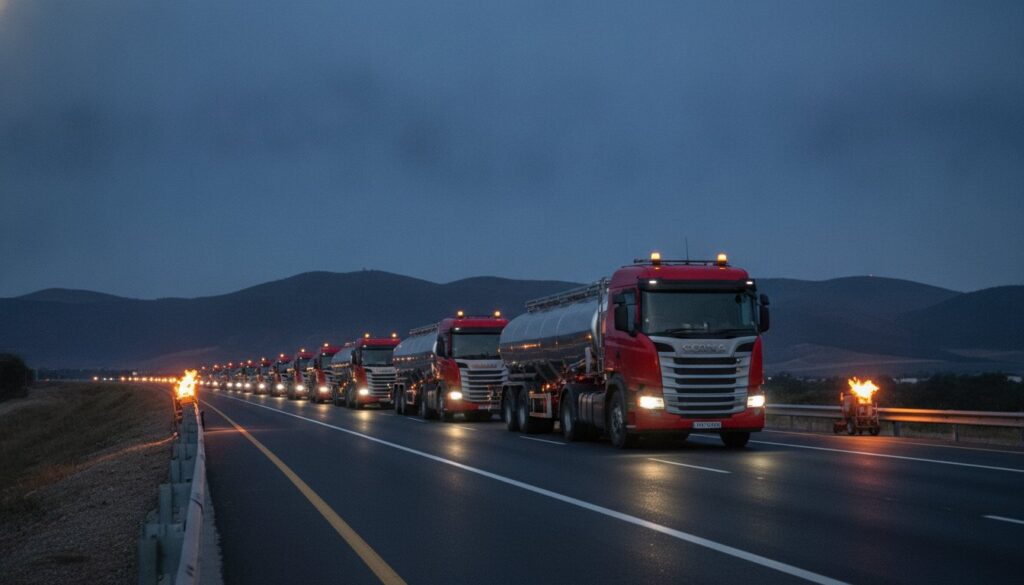
The success of South Africa’s road infrastructure in 2026 doesn’t depend on the volume of material ordered; it rests on the precision of its arrival. You recognise that a single degree of temperature loss or a minor disruption in bitumen transport and logistics can compromise the integrity of an entire project. It’s a high-stakes environment where delays aren’t merely inconveniences but significant financial liabilities that threaten the momentum of national development.
This guide provides the strategic framework required to master the complexities of the bitumen supply chain. We’ll ensure your infrastructure projects remain on schedule by exploring the mechanics of temperature-controlled haulage and the latest regulatory mandates. You’ll gain a comprehensive understanding of the transition to SATS 3208 performance-graded binders and the essential safety protocols governed by SANS 10231. We’ll examine how to build a resilient logistics network that reduces operational risk whilst maintaining the highest national quality standards, positioning your operations as a benchmark for industrial excellence.
Key Takeaways
- Evaluate how the precision of supply chain management directly influences the total cost and long-term durability of national road infrastructure projects.
- Master the technical complexities of bitumen transport and logistics, specifically the thermal engineering required to maintain material integrity from refinery to site.
- Implement strategic 24/7 coordination protocols to provide visibility and stability across the nationwide distribution network, ensuring project timelines remain secure.
- Navigate the evolving regulatory landscape of 2026, ensuring full compliance with SANS 10231 standards for the transport of hazardous materials and environmental safety.
- Identify the operational advantages of aligning with a steadfast industrial partner to mitigate supply chain disruptions whilst upholding the highest quality standards.
The Critical Role of Bitumen Logistics in National Infrastructure
South Africa’s economic vitality is etched into its road surfaces. Every kilometre of newly laid pavement represents a triumph of engineering and, more importantly, a success of the supply chain. Without a stable and predictable flow of material, the machinery of national development grinds to a halt. Bitumen transport and logistics is not a simple haulage exercise; it is a specialised operation that demands rigorous thermal management and precise scheduling. Unlike standard diesel distribution, bitumen requires constant heat to remain in a liquid state, making it one of the most challenging products to move across the provinces.
Logistics efficiency dictates the ultimate viability of any civil engineering project. When supply chains falter, site teams stand idle, and overheads escalate rapidly. Project managers in 2026 recognise that the cost of a delayed delivery often far exceeds the value of the material itself. Reliability is the cornerstone of progress, ensuring that the 2026 developmental goals for road maintenance and expansion remain within reach. A resilient logistics network acts as a steadfast guardian against the financial risks associated with site delays and material degradation.
Bitumen as the Foundation of Economic Connectivity
Roads are the lifeblood of trade and social mobility. High-quality Asphalt concrete surfaces facilitate the movement of goods from industrial hubs to distant markets. When logistics bottlenecks occur, the impact ripples through the entire construction sector, causing missed deadlines and budget overruns. Independent resellers play a vital role in this ecosystem. They provide the agility needed to bridge the gap between primary refineries and remote project sites, diversifying the supply landscape and reducing the risk of single-point failures in the national network.
Current Trends in South African Bitumen Procurement
The industry is moving away from fragmented, transactional purchasing. Instead, there’s a clear shift toward resilient, integrated models that prioritise long-term reliability over short-term savings. This is particularly evident in the rising demand for polymer-modified bitumen (PMB). Whilst PMB offers superior durability for heavy-traffic routes, it introduces additional logistical hurdles, requiring precise temperature control and specialised equipment. Integrating these requirements into broader fuel infrastructure planning South Africa is now a prerequisite for success. Securing a reliable bulk bitumen supply ensures that projects aren’t just built, but sustained. Bitumen procurement is a strategic rather than a tactical function, demanding foresight and expert coordination to safeguard project continuity.
Technical Requirements for Bitumen Transport and Temperature Control
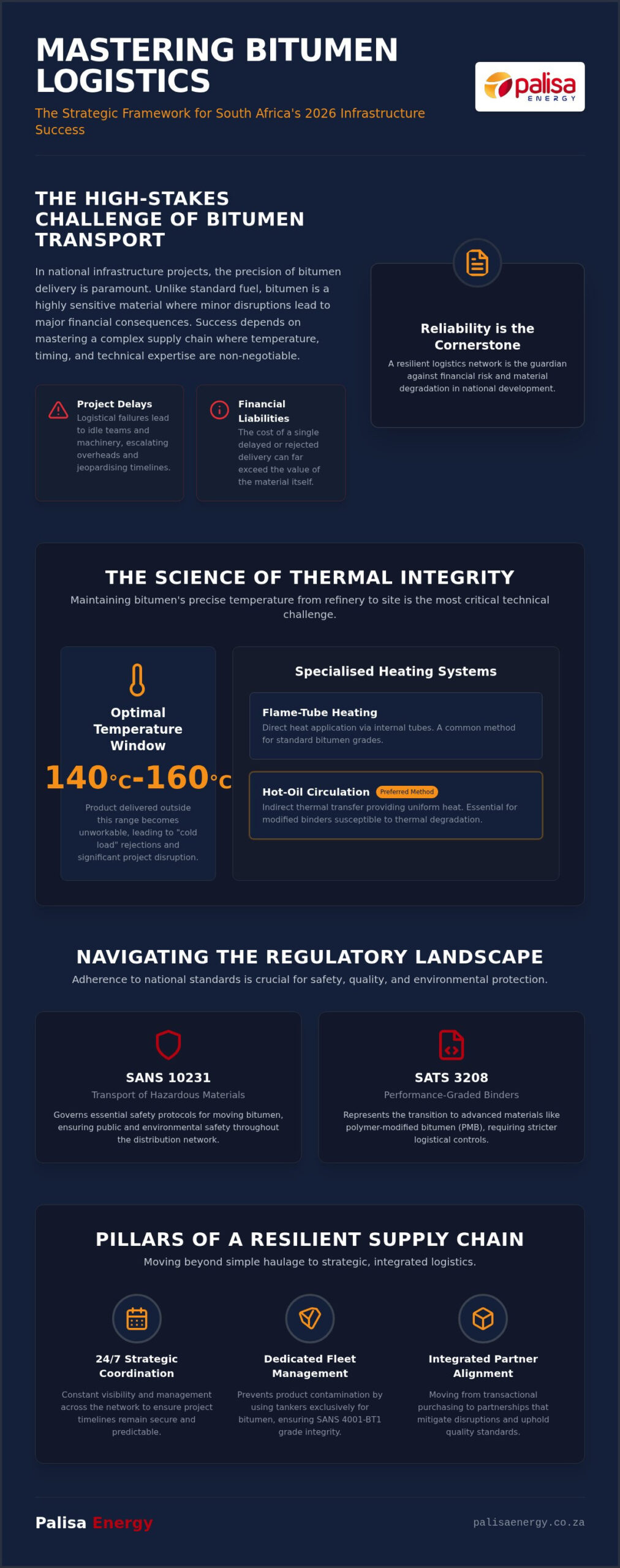
Bitumen is a thermoplastic material with a viscosity that is highly sensitive to thermal fluctuations. Successful bitumen transport and logistics hinges on the ability to deliver product within a narrow temperature window, typically between 140°C and 160°C. If the temperature drops below these thresholds, the material becomes unworkable, resulting in “cold loads” that are invariably rejected at the project site. This failure doesn’t just waste material; it disrupts the entire construction sequence and incurs heavy standing-time charges for onsite machinery.
To mitigate heat loss during transit, transport units utilise specialised heating systems. Flame-tube heating involves direct heat application through internal tubes, whilst hot-oil circulation provides a more uniform, indirect thermal transfer. Hot-oil systems are increasingly favoured in 2026 for modified binders that are susceptible to localised overheating and thermal degradation. Maintaining this thermal equilibrium requires a deep understanding of the material’s properties and the mechanical limits of the delivery fleet.
Dedicated fleet management is the only effective way to prevent product contamination. Using a tanker that previously carried heavy fuel oil without a certified cleaning process can alter the bitumen’s chemical composition, causing it to fail SANS 4001-BT1 penetration grade specifications. Rigorous cleaning protocols and dedicated vessels ensure that the product arriving at the site matches the refinery’s laboratory results exactly.
Managing the Thermal Lifecycle of Bulk Bitumen
Common penetration grades in South Africa, such as 60/70 and 80/100, demand specific temperature ranges to ensure optimal bonding with aggregates. As the industry transitions toward SATS 3208 performance-based standards, the requirement for thermal precision has become even more acute. Modern logistics providers now employ real-time IoT sensors to monitor internal temperatures throughout the journey. This technological oversight allows for immediate intervention if temperatures deviate, protecting the material’s integrity and the project’s timeline.
Isothermal Tankers vs Standard Fuel Tankers
Standard tankers lack the heavy-duty insulation required for high-temperature petroleum products. Isothermal tankers are engineered with thick layers of mineral wool or glass fibre cladding to minimise heat dissipation across South Africa’s diverse climatic zones. These units also feature high-capacity positive displacement pumps designed to handle high-viscosity liquids without mechanical failure. Maintaining these rigorous operational standards is why many contractors partner with established energy specialists to secure their supply chains. All handling must strictly comply with SANS 10231 to manage the inherent risks of transporting hazardous, high-temperature liquids safely.
Strategic Supply Chain Management: Beyond Simple Haulage
Bitumen transport and logistics requires a shift from reactive hauling to proactive coordination. Strategic supply chain management integrates material delivery with comprehensive fuel infrastructure planning South Africa. This alignment ensures that every delivery is synchronised with the project’s construction phase, preventing the costly bottlenecks that often plague large-scale surfacing operations. A 24/7 logistics coordination centre provides the necessary oversight to manage nationwide distribution, offering industrial clients a level of predictability that traditional hauliers cannot match.
Real-time monitoring enhances visibility across the entire supply chain. By tracking every vessel’s location and thermal status, logistics partners can anticipate potential delays and implement corrective actions before they impact the project site. This data-driven approach allows for the delicate balancing of inventory levels with just-in-time delivery. For large-scale projects, this precision reduces the need for extensive on-site storage whilst ensuring that surfacing teams never run out of material during critical work windows.
Nationwide Distribution and Hub-and-Spoke Logistics
Hub-and-spoke logistics models optimise routes across the country. By utilising regional hubs, providers can ensure the most efficient delivery paths, even to the most remote project sites. Strategic partnerships with major oil companies are essential for reliable sourcing, providing a necessary buffer against market volatility. Leveraging nationwide fuel distribution networks allows for the seamless movement of bitumen alongside other critical energy products, creating a holistic supply solution that supports national development.
The Role of Infrastructure Planning in Bitumen Storage
Effective logistics begins before the first truck leaves the refinery. On-site storage solutions must be designed to facilitate easy decanting and efficient heating to maintain material workability. Compatibility between the transport fleet and the receiving facilities is non-negotiable for maintaining product integrity and ensuring site safety. The synergy between logistics and infrastructure design ensures that the physical movement of bitumen is perfectly aligned with the technical requirements of the project site. This integrated approach transforms the supply chain from a potential risk factor into a reliable engine of project success.
Risk Mitigation and Regulatory Compliance in Bitumen Distribution
Bitumen transport and logistics carries inherent risks that extend beyond simple road safety. Because the material is transported at temperatures often exceeding 150°C, it is classified as a dangerous good under South African law. This classification necessitates strict adherence to the National Road Traffic Act and the specific mandates of SANS 10231. Compliance is not a static goal; it is a continuous process of oversight that protects both the workforce and the integrity of the national infrastructure. Failing to meet these standards can lead to catastrophic project delays, heavy fines, and irreparable environmental damage.
Safety protocols must be integrated into every stage of the distribution cycle. This includes securing permits from the Department of Disaster and Emergency Services (DEMS) and ensuring that every vehicle in the fleet is equipped with the necessary safety apparatus. Regular compliance auditing serves as a vital safeguard, identifying potential vulnerabilities in the supply chain before they manifest as operational failures. For industrial stakeholders, maintaining this level of rigour is essential for long-term project viability and corporate reputation.
Adhering to National Safety Standards
The transport of high-temperature petroleum products requires specialised equipment and highly trained personnel. Every vehicle must feature clear dangerous goods signage, fire suppression systems, and specialised spill containment kits. Drivers are required to hold a professional driving permit (PrDP) with a “D” category endorsement, which involves rigorous annual theoretical and practical training. This focus on individual competency is a critical component of fuel security for business, as it reduces the likelihood of transit incidents that could jeopardise supply continuity. Operators must also prepare for the 2026 enforcement of a zero-percent blood alcohol limit, a legislative shift that demands total sobriety and heightened accountability across the logistics sector.
Environmental Stewardship in Bitumen Logistics
Environmental responsibility is a core pillar of modern industrial operations. Bitumen logistics must align with the National Environmental Management Act (NEMA) to prevent soil and water contamination. Spills involving bituminous products are particularly difficult to remediate, making prevention the only viable strategy. Operational excellence in this area involves implementing advanced decanting procedures that minimise waste and prevent atmospheric emissions. By choosing to consult with our compliance specialists, you ensure that your supply chain not only meets current environmental mandates but also contributes to more sustainable energy solutions. Protecting the South African landscape whilst delivering essential infrastructure materials is a balance that defines the industry’s most reliable partners.
Palisa Energy: Your Strategic Partner for Bulk Bitumen Solutions
Palisa Energy operates as a formidable corporate entity and a dedicated strategic partner, positioning itself as a steadfast guardian of the industrial supply chain. We recognise that the success of South Africa’s 2026 infrastructure goals depends on more than just material availability; it requires a partner who manages the intricate complexities of bitumen transport and logistics with unwavering precision. As a South African-owned independent reseller, we provide the stability and forward momentum necessary to navigate a high-stakes energy sector, allowing our clients to focus on execution whilst we safeguard their material integrity.
Our commitment to operational excellence is reflected in our proactive approach to supply chain management. We don’t merely move product; we enable growth through meticulous planning and a deep understanding of the regulatory landscape. With 24/7 support for industrial customers, we ensure that project sites never face the debilitating consequences of a bitumen shortage. This reliability is built on a foundation of integrity and a pursuit of progress that aligns perfectly with the needs of large-scale civil engineering projects across the country.
Comprehensive Procurement and Distribution
Success in the bitumen market is heavily influenced by the strength of one’s network. Palisa Energy leverages strategic partnerships with leading oil companies to secure a consistent and high-quality bulk bitumen supply for our clients. These relationships, combined with our nationwide distribution network, allow us to offer competitive industrial rates and turnkey support for even the most complex infrastructure projects. Our expertise in infrastructure planning and compliance auditing ensures that every delivery meets the highest national safety and quality standards, providing a holistic solution that integrates seamlessly with your existing fuel requirements.
Securing Your Project’s Future with Palisa Energy
Choosing a logistics partner is a decision that impacts the longevity and durability of South Africa’s road network. A strategic partnership with Palisa Energy offers long-term benefits that extend beyond a single delivery, providing the industrial support needed to manage risk and enhance operational efficiency. As you plan for your 2026 infrastructure needs, our visionary team is ready to provide the professional authority and logistical precision your projects deserve. We invite you to initiate a consultation with our experts to discover how our commitment to excellence can fortify your supply chain. Let us take the burden of complex logistics so you can deliver the infrastructure that drives our nation forward.
Fortifying South Africa’s Infrastructure Through Strategic Logistics
Mastering the complexities of bitumen transport and logistics is the defining factor for industrial project success in 2026. We’ve explored how technical thermal precision and rigorous adherence to national safety standards prevent the “cold loads” and regulatory delays that threaten project timelines. By integrating logistics with forward-thinking infrastructure planning, you transform a potential supply chain vulnerability into a resilient engine of national growth. This transition requires more than a haulier; it demands a dedicated strategic partner focused on long-term stability.
As a South African-owned independent reseller with nationwide reach and strategic partnerships with leading oil companies, Palisa Energy provides the stability your operations require. Our 24/7 support and deep expertise in compliance auditing ensure your supply chain remains a benchmark of excellence. Partner with Palisa Energy for your next infrastructure project to secure a future built on reliability and professional authority. We look forward to enabling your vision and driving national progress together with the confidence that only a steadfast guardian of the supply chain can provide.
Frequently Asked Questions
What are the primary challenges in bitumen transport and logistics?
Thermal management, material contamination, and regulatory compliance represent the most significant hurdles in the industry. Bitumen must be maintained within a precise temperature range, typically between 140°C and 160°C, to remain workable. Any deviation leads to rejected loads and costly site delays. Navigating the 2026 regulatory landscape, including SANS 10231 and dangerous goods permits, requires a partner with deep expertise in infrastructure planning and dedicated fleet oversight.
How is bitumen temperature maintained during long-distance transport?
Temperature is preserved through the use of isothermal tankers equipped with high-grade mineral wool or glass fibre insulation. These units utilise specialised heating systems, such as flame-tubes or hot-oil circulation, to counteract heat dissipation during transit. Modern logistics providers also employ real-time IoT sensors to monitor thermal status throughout the journey. This technological oversight ensures the product arrives at the project site ready for immediate application without degradation.
What safety regulations govern bitumen transport in South Africa?
The transport of bitumen is governed by the National Road Traffic Act and SANS 10231 standards for dangerous goods. In 2026, operators must adhere to a strict zero-percent blood alcohol limit and possess valid permits from the Department of Disaster and Emergency Services. Drivers require annual specialised training and a professional driving permit with a “D” endorsement. Regular compliance auditing is essential to ensure every vehicle meets these rigorous national safety requirements.
Can bitumen be transported in standard fuel tankers?
Bitumen cannot be transported in standard fuel tankers because they lack the necessary insulation and internal heating systems. Standard tankers aren’t engineered to handle the high temperatures required to keep bitumen in a liquid state. Using incorrect equipment leads to material solidification and potential mechanical failure of standard pumping systems. Professional bitumen transport and logistics requires dedicated isothermal units to maintain product integrity and ensure safe handling.
What is the difference between paving grade and industrial bitumen logistics?
Paving grade logistics focuses on the “hot-mix” cycle, where timing is critical to ensure the material remains workable for road surfacing machinery. This requires high-volume bulk deliveries and tight scheduling between the refinery and the site. Industrial bitumen logistics, often used for waterproofing or roofing, may involve smaller quantities or different packaging. However, bulk industrial deliveries still demand the same level of thermal control and specialised equipment as paving projects.
How does Palisa Energy ensure the reliability of its bitumen supply chain?
We leverage strategic partnerships with leading oil companies to guarantee a consistent supply of bulk petroleum products across the country. Our 24/7 coordination centre and nationwide distribution network provide total visibility over every shipment. By combining infrastructure planning with real-time monitoring, we mitigate the risks of supply disruptions. This proactive approach allows us to act as a steadfast guardian of your supply chain, ensuring your projects remain on schedule.
What should I look for in a bitumen logistics partner?
Select a partner with a proven track record in compliance auditing and a deep understanding of South African safety standards. They must offer 24/7 support and possess a dedicated fleet of isothermal tankers for nationwide delivery. A reliable partner should also demonstrate expertise in infrastructure planning to assist with on-site storage solutions. Palisa Energy provides this level of professional authority as a South African-owned independent reseller committed to operational excellence.
How do logistics costs impact the overall price of bulk bitumen?
Logistics costs are a major driver of the final price, reflecting the specialised equipment and heating requirements needed for safe delivery. Factors such as route complexity, fuel prices, and the need for 24/7 monitoring influence the total expense. Whilst expert bitumen transport and logistics may carry a higher initial cost, it significantly reduces the financial risk of project delays and material rejection. Efficient coordination ensures that your infrastructure budget is protected from unforeseen operational failures.